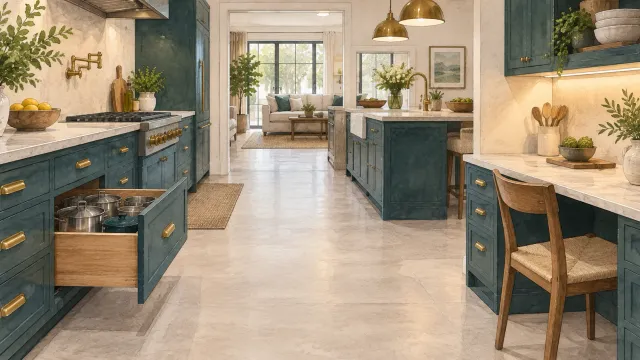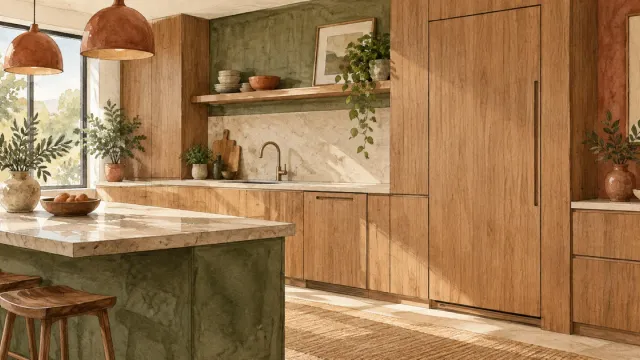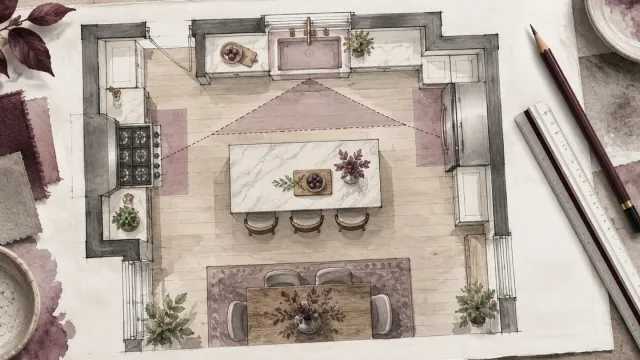
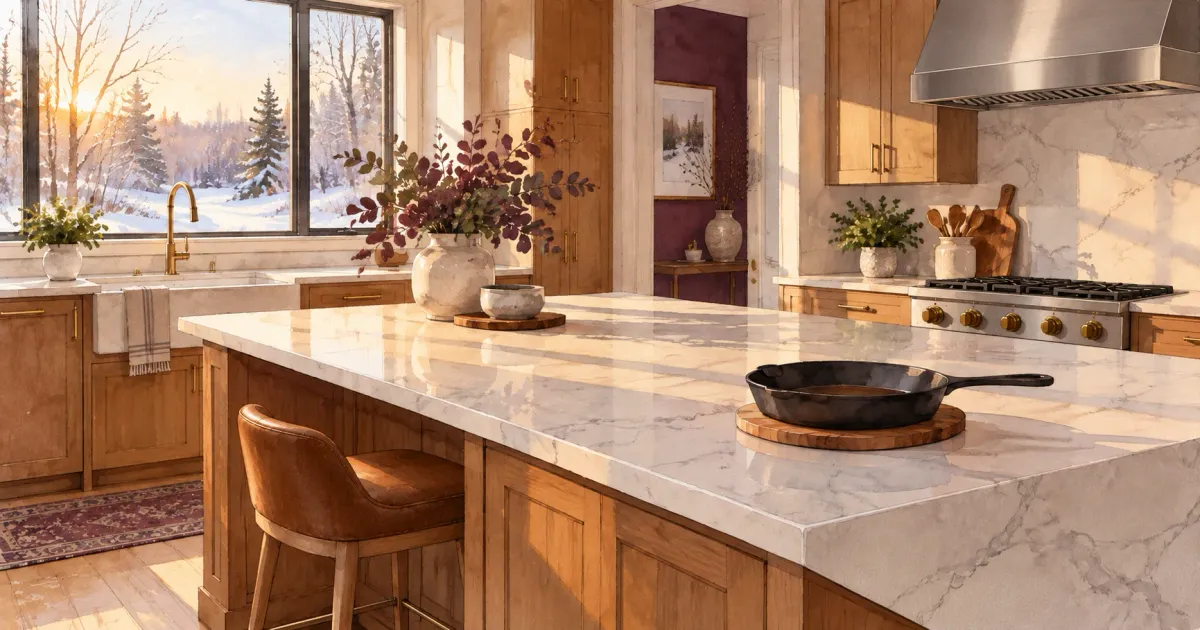
A kitchen countertop has to handle more than a few dinner preparations. It becomes the landing spot for backpacks, serving platters, mail, homework, and the occasional rushed cup of coffee. Before choosing a surface, it helps to see the real quartz countertops pros and cons: how the material performs in family homes, where it earns its reputation, and where homeowners should be more careful before making a final selection.
Quartz is often described as a worry-free choice, and for many kitchen remodels, it is. It offers a consistent appearance, strong everyday durability, and low-maintenance care. But it is not heatproof, not impossible to chip, and not automatically the right fit for every design or budget. A good decision comes from understanding those trade-offs before the slabs are selected and fabrication begins.
- The Short Answer: Is Quartz Good for Kitchens?
- The Pros: Why Quartz Works So Well in Family Kitchens
- The Cons: Trade-Offs Homeowners Should Know
- The Silica Question: Why Fabrication Matters
- How Quartz Compares With Other Countertop Materials
- Cost Factors Beyond the Slab Price
- How to Choose the Right Quartz Color and Pattern
- Frequently Asked Questions
The Short Answer: Is Quartz Good for Kitchens?
Yes. Quartz is one of the best all-around countertop choices for a busy family kitchen, as long as the household is willing to use trivets and treat exposed edges with some care. It is an engineered surface made from ground natural quartz combined with resins, pigments, and other binders. That manufacturing process creates a dense, nonporous countertop with a broad range of colors and patterns, from clean white designs to warm veining that resembles natural stone.
Its biggest advantage is simplicity. Quartz does not require routine sealing, resists common food stains well, and is easy to clean after daily use. It can give a remodeled kitchen a polished, high-end look without adding another annual maintenance task to a homeowner's list.
The important qualification is that quartz is a durable surface, not an indestructible one. A hot pan placed directly on the countertop can damage the resin in the material. Hard impacts can chip an edge or corner. And while many quartz patterns mimic marble beautifully, homeowners who want the one-of-a-kind movement of natural stone may still prefer the real thing.
The Pros: Why Quartz Works So Well in Family Kitchens
The most practical benefit of quartz is its nonporous surface. Unlike most natural stone, it does not have open pores that readily absorb liquids. Coffee, cooking oil, berries, tomato sauce, and similar kitchen spills are far less likely to leave a permanent stain when they are wiped up in a reasonable amount of time.
That characteristic makes quartz especially appealing around busy prep areas and on an island that doubles as a homework table. Regular care is straightforward: warm water, a soft cloth, and a mild dish soap are usually enough. There is no sealer to buy and no schedule to remember.
Quartz also offers design consistency. Natural stone changes from slab to slab, sometimes dramatically. That variation is part of its appeal, but it can make planning more difficult. Quartz gives homeowners more predictability in color and pattern, which is reassuring when coordinating cabinets, backsplash tile, flooring, and paint.
On a large island, that control matters. A soft white quartz with gentle gray veining supports a classic kitchen, while warmer beige and taupe options pair well with natural wood cabinetry. More dramatic patterns can create a focal point without the etching and upkeep that come with real marble. For more on how islands are being designed around family use, see our guide to kitchen island features for families.
The Cons: Trade-Offs Homeowners Should Know
The biggest drawback of quartz is heat. Because quartz countertops contain resin, extreme or sudden heat can discolor, scorch, or crack the surface. A trivet or hot pad should always sit beneath a pan, slow cooker insert, sheet pan, or countertop appliance that throws substantial heat, such as an air fryer or electric griddle.
That does not make quartz impractical. It means everyday habits matter. Homeowners who regularly move cast iron directly from oven to island, or who want to set hot pots down without thinking, may be happier with a material that tolerates heat better.
Quartz can also chip, particularly along exposed edges, around an undermount sink, or at a narrow overhang. The risk is rarely a reason to avoid the material, but it should shape design decisions. A softly eased or rounded edge is more forgiving than a sharp square profile, and a qualified fabricator will make sure cutouts and overhang supports are handled properly. Small chips can usually be filled by a fabricator with color-matched resin, though a repair on a bold pattern is harder to hide than one on a solid color.
Sunlight is the third consideration, and it matters more in Minnesota than many homeowners expect. Prolonged direct ultraviolet exposure can yellow or fade some quartz products over time, which is why quartz is generally not recommended for uncovered outdoor kitchens. Indoors, our low winter sun reaches much deeper into a room than summer sun does, so an island that sits in shade in July can sit in direct light for hours in January. If your kitchen has a large south- or west-facing window, check the manufacturer's guidance for that specific product before choosing a slab.
Older cabinets and heavy slabs. Many South Metro homes built in the 1970s through the 1990s still have their original cabinet boxes, which were often built to carry laminate. Quartz is far heavier, and it needs a level, well-supported base to avoid stress cracks at seams and sink cutouts. If you are keeping existing cabinets, have them checked for level and structural soundness before the countertop is templated.
The Silica Question: Why Fabrication Matters
The most serious concern with quartz is a worker-safety issue, not a homeowner one: cutting and grinding the slabs releases crystalline silica dust. According to a CDC Morbidity and Mortality Weekly Report, engineered stone contains substantially more silica than natural stone.
That report documented severe silicosis cases among stone fabrication workers in four states, including the first two U.S. deaths linked to engineered stone. Silicosis is an irreversible lung disease. Australia went further: as of July 1, 2024, the Australian government banned the manufacture, supply, and installation of new engineered stone benchtops, panels, and slabs. Countertops already installed there were allowed to stay in place, since the risk comes from processing the material. This is a large part of the answer when people ask why quartz seems to be losing ground.
For a homeowner, the documented hazard is the dust created during fabrication. It is not the finished, installed countertop. The practical takeaways are these:
- Ask how the fabricator cuts. Water-fed saws and tools, local dust extraction, and respiratory protection are the controls that matter. A reputable shop will answer that question without hesitation.
- Keep dry cutting out of your home. Faucet holes and small adjustments are sometimes made on site. Those should be done wet, with dust control, not with a dry grinder in your kitchen.
- Know that alternatives are shifting. Some manufacturers now market lower-silica engineered surfaces. If this matters to you, ask your fabricator what is available and how its content compares.
How Quartz Compares With Other Countertop Materials
No countertop material is best in every kitchen. The right choice depends on how the room is used, the look you want, and how much maintenance you are comfortable accepting. We cover the most common head-to-head decision in detail in quartz vs. granite. The short version: granite handles heat better and brings natural variation, while quartz wins on stain resistance and no-sealing care.
A few other comparisons come up often:
- Marble delivers a timeless look, particularly for baking areas and traditional kitchens. It is also softer and far more prone to etching and staining than quartz. A marble-look quartz is the practical choice for a pristine surface. Real marble suits homeowners who welcome a natural patina.
- Quartzite is often confused with quartz, but it is a natural stone, not an engineered one. It generally handles heat and UV better than quartz, needs sealing, and varies from slab to slab. Always see the actual slab in person rather than choosing from a photo.
- Solid surface has nearly invisible seams and can often be repaired, but it scratches and heat-damages more easily than quartz.
- Laminate remains the budget-conscious option, with far better patterns than it had years ago, though it does not offer the depth, durability, or feel of quartz.
For a broader look at where surface materials are heading, see our roundup of countertop trends for 2026.
Cost Factors Beyond the Slab Price
Quartz pricing is driven by far more than the color group. The final number depends on how much material the layout requires, slab size, the number of seams, edge profile, sink and cooktop cutouts, backsplash details, and how complex the installation is.
A kitchen with a large waterfall island, for example, uses more material and requires careful pattern alignment. A heavily veined quartz may need extra planning so the movement flows naturally across seams and down the waterfall returns. Those details affect both labor and material use, but they also separate an ordinary installation from one that looks intentional.
When reviewing estimates, make sure the scope is clear. A reliable remodeling partner should explain what fabrication and installation include, where seams will fall, whether removal of the old countertops and plumbing reconnection are covered, and what could change the final cost. Asking the right questions before a project starts prevents most surprises later.
How to Choose the Right Quartz Color and Pattern
The best way to choose quartz is to see a full slab next to your actual finish samples. Bring cabinet, flooring, backsplash, and paint samples along. A small sample is helpful, but a full slab tells the real story, since veining can be bolder, warmer, or more directional than it appears in a showroom chip.
For a smaller or darker kitchen, a light quartz with restrained movement can brighten the room without making it feel busy. If the cabinetry is simple, a stronger pattern on the island can add interest while the perimeter counters stay quieter. In an open-concept home, consider how the countertop relates to nearby flooring and furniture, not just the kitchen cabinets.
White quartz remains popular, but it is not the only safe choice. Soft greige, creamy ivory, muted charcoal, and warm stone-inspired patterns can make a kitchen feel more grounded and livable. The best selection is usually the one that supports the home's overall character rather than chasing a short-lived trend.
Then settle the practical details before fabrication: seam locations, sink style, faucet hole placement, edge profile, and any support brackets under overhangs. The NKBA Kitchen Planning Guidelines are a useful reference for seating overhangs and clearances. Template measurements should happen after cabinetry is installed and secured, never before.
Frequently Asked Questions
What are the negatives of quartz countertops?
The main drawbacks are limited heat resistance, the possibility of chipping at edges and corners, and sensitivity to prolonged direct sunlight. Quartz is also rarely the cheapest option, and it does not offer the one-of-a-kind variation of natural stone. None of these rule it out, but they should shape how you design and use the kitchen.
Is a quartz countertop safe to have in my home?
Yes. The documented silica hazard comes from the dust created when slabs are cut, ground, and polished during fabrication, which affects the workers doing that job. A finished, installed countertop does not release that dust in normal use. The homeowner's part is choosing a fabricator that uses wet-cutting and dust controls, and making sure any on-site cuts are done the same way.
Can a chipped quartz countertop be repaired?
Usually, yes. A fabricator can fill small chips with a color-matched resin and polish the area smooth. Repairs blend best on solid or lightly patterned colors, and they are more noticeable on bold veining, which is one reason an eased edge profile is worth considering in a busy kitchen.
Is quartz the same as quartzite?
No. Quartz is an engineered product made from ground quartz and resin. Quartzite is a natural metamorphic stone quarried in slabs. Quartzite generally tolerates heat and sunlight better but needs sealing, while quartz needs no sealing but requires trivets.
For Twin Cities homeowners planning a kitchen remodel, Honey-Doers treats countertop selection as one part of a larger, carefully coordinated plan. Cabinet layout and condition, lighting, backsplash materials, appliance clearances, and the daily rhythm of the household all deserve consideration alongside the slab itself.
Quartz is a strong choice when you want a beautiful, durable countertop with uncomplicated daily care and dependable color control. View full slabs, ask honest questions about heat, edges, and how the fabricator cuts, and choose an installation team that treats the final details with the same care as the design decision. Honey-Doers designs and builds kitchens in Eden Prairie and throughout the South Metro. Contact us to talk through the right countertop for your kitchen.