Walk into a lot of new-build luxury kitchens in Lakeville and you'll see the same thing: gorgeous custom cabinetry, a waterfall island, thoughtful lighting — and then a wall of heavy stainless steel interrupting all of it. The refrigerator, the dishwasher, sometimes a wine column, all sitting there as visually loud as a showroom display, working against everything the rest of the room is trying to do.
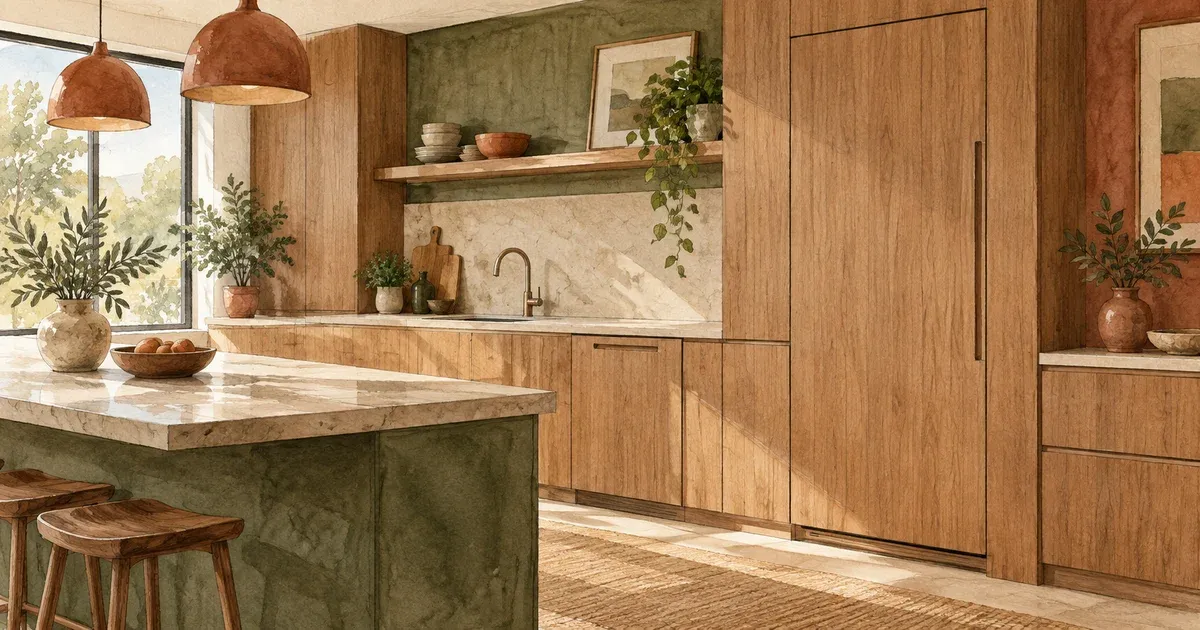
Panel-ready appliances solve that specific problem. Instead of a stainless face, the appliance accepts a custom door panel built to match your surrounding cabinetry, so it disappears into the room rather than interrupting it. It's one of the most requested upgrades in higher-end kitchen remodels right now, building on the broader appliance-selection questions we cover in our guide to updating your kitchen's appliances — but it's also one of the easier upgrades to get wrong, both in planning and in budget. Here are the seven things worth understanding before you commit.
- Pro: Flush-Depth Framing That Disappears Into Cabinetry
- Pro: Custom Door Panels That Match Your Cabinetry Exactly
- Pro: Elevated Visual Flow in Open-Concept Kitchens
- Con: Strict Ventilation Requirements Most Kitchens Aren't Built For
- Con: Custom Panel Weight Limits That Constrain Design
- Con: Longer Cabinet Lead Times Before Installation
- Con: Harder — and Costlier — to Replace Down the Road
Pro: Flush-Depth Framing That Disappears Into Cabinetry
Flush-depth framing is what makes a panel-ready appliance actually read as cabinetry rather than "an appliance wearing a costume." True panel-ready models are built with a shallower depth and a recessed frame specifically designed to sit flush with surrounding cabinet faces, not just accept a slapped-on wood front. That distinction matters — a standard appliance with an aftermarket panel kit will almost always sit slightly proud of the cabinet line, which is the detail that gives away a paneled appliance from across the room.
The visual payoff is real. A properly flush-mounted panel-ready refrigerator or dishwasher reads as continuous cabinetry from a normal viewing distance, which is exactly the effect most homeowners are chasing when they ask about this upgrade in the first place.
Pro: Custom Door Panels That Match Your Cabinetry Exactly
A panel-ready appliance accepts a custom door panel built by your cabinet maker, using the exact same wood species, stain, paint color, and hardware as the rest of the kitchen. That's a meaningfully different result than a "paneled appliance package" sold with a generic wood-look insert — those are closer to stainless steel with a costume than a genuine cabinetry match.
This is also where the design gets personal. Some homeowners choose to match every panel exactly, so the appliance is fully invisible. Others use a contrasting wood tone or a bold color on the panel deliberately, treating it as a design accent rather than camouflage. Houzz's gallery of kitchens with paneled appliances is a good place to see both approaches side by side before deciding. Either way, the choice needs to be made early, since it drives the cabinet order.
Pro: Elevated Visual Flow in Open-Concept Kitchens
This upgrade earns its keep the most in open-concept layouts, where the kitchen is visible from the living room, dining area, or entry the moment you walk in the door. A stainless steel refrigerator in that sightline reads as "kitchen equipment" even from across the room. A panel-ready one, matched to the cabinetry, reads as furniture — part of a continuous, considered space instead of a functional zone that happens to be open to the rest of the house.
If your kitchen opens directly onto a living or dining space, prioritize paneling the appliance that sits most directly in that sightline first — usually the refrigerator — even if budget only allows one. It does more for the room's overall feel than paneling a dishwasher or wine column that's mostly hidden below counter height.
Con: Strict Ventilation Requirements Most Kitchens Aren't Built For
The first sentence after each heading should answer it directly, and the direct answer here is not encouraging: panel-ready refrigerators run warmer internally than standard models because the custom wood panel blocks some of the passive airflow a stainless door allows, so they depend on built-in venting to do work the door normally would. That means dedicated toe-kick vents, rear clearance, and sometimes a fan kit — none of which are optional extras, and none of which most existing kitchen layouts already have in place.
Retrofitting proper ventilation into cabinetry that wasn't designed for it is one of the more expensive surprises on a panel-ready project, because it usually means reworking the toe-kick and surrounding cabinet boxes, not just swapping an appliance.
Con: Custom Panel Weight Limits That Constrain Design
Every panel-ready appliance model publishes a maximum panel weight in its spec sheet, and it's easy to miss until a cabinet maker is already mid-fabrication. Thick, solid-wood panels or heavily inset designs can exceed that limit, especially on dishwashers, where a too-heavy door puts real strain on the hinge system over time.
This quietly limits your material choices. A book-matched slab of solid walnut might be exactly the look you want, but if it's too heavy for the appliance's hinge rating, you're choosing between a lighter veneer construction or a different material entirely — a conversation that needs to happen with your cabinet maker before the panel is built, not after.
Con: Longer Cabinet Lead Times Before Installation
A stock stainless appliance can often be delivered and installed within days. A panel-ready setup requires a second, dependent process: custom cabinetry and door panels have to be designed, fabricated, and finished to match the appliance's exact specifications, which routinely adds several weeks to a project timeline. On a full kitchen remodel, that's usually already priced into the schedule — but it's a real surprise for anyone trying to add panel-ready appliances into an otherwise-finished kitchen.
Con: Harder — and Costlier — to Replace Down the Road
This is the trade-off that shows up years after the remodel, not during it. When a standard stainless appliance dies, replacing it is a same-week errand. When a panel-ready appliance dies, the replacement has to match the exact dimensions and panel-mounting spec of the original, or the custom panel needs to be rebuilt to fit a new model — and appliance manufacturers change their panel-ready specs across product generations more often than homeowners expect. You're not just buying an appliance; you're committing the surrounding cabinetry to whatever comes next.
What This Actually Costs
The cost gap between a standard kitchen and a panel-ready one isn't really about the appliances — it's almost entirely about the cabinetry and labor built around them.
| Standard Stainless Kitchen | Panel-Ready Luxury Kitchen | |
|---|---|---|
| Appliance cost | Manufacturer's standard pricing | Typically 20–40% more for the panel-ready model itself |
| Cabinetry | Standard cabinet run | Custom-fabricated panels matched to appliance specs |
| Hardware | Manufacturer's standard handles | Custom pulls matched to cabinetry hardware |
| Ventilation | Built into standard appliance design | Dedicated toe-kick venting, rear clearance, sometimes a fan kit |
| Installation labor | Standard delivery and install | Specialized installer familiar with flush-mount tolerances |
| Typical added cost, full kitchen | — | $8,000–$20,000+ over a comparable stainless-steel kitchen |
That range moves a lot depending on how many appliances get paneled — a refrigerator alone is a very different cost than a refrigerator, dishwasher, and wine column all matched to custom cabinetry — and on the ENERGY STAR performance tier you choose, since higher-efficiency compressors and insulation packages carry their own premium on top of the panel-ready upgrade itself. The ENERGY STAR Home Upgrade hub is worth a look before finalizing a model, since a certified refrigerator can meaningfully offset the appliance's higher purchase price over its lifespan.
Common Mistakes to Avoid
The single most expensive mistake on a panel-ready project is ordering custom cabinetry before the appliance's final spec sheet is locked. Manufacturers occasionally revise panel dimensions, weight limits, and mounting hardware between model years, and a cabinet maker working from an outdated spec sheet can produce panels that don't fit the unit that actually arrives.
Door-swing clearance is the second-most common miss. A panel-ready refrigerator with a full custom panel is heavier and often wider than its stainless equivalent, and that extra weight and width can change how far the door needs to swing to clear an adjacent island or wall — worth checking against the exact model's spec sheet, not a generic kitchen layout rule of thumb.
The third is hiring an installer without specific panel-ready experience. Flush-mount tolerances are unforgiving — a quarter-inch of misalignment is the difference between "invisible" and "obviously off" — and it's a different skill set than a standard appliance delivery and install.
Is This a Timeless Choice?
Honestly, not necessarily — and that's worth saying plainly rather than glossing over. Panel-ready appliances are a strong current trend, but trends shift, and a kitchen fully committed to matching every appliance to its cabinetry is a kitchen that's harder to update piecemeal later. Ten years from now, this look may read as distinctly "of this era" the way integrated appliances from past decades sometimes do now.
That's not a reason to avoid it. If a fully seamless, furniture-like kitchen is genuinely what you want to live with — not what you think will maximize resale in a decade — it's a great choice, and one of the more satisfying upgrades a luxury kitchen remodel can deliver. The honest framing is simply that this is a design decision made for how you want to live in the space now, not a hedge against future style shifts.
Executive-style homes on larger lots — the kind common in Shakopee's Stonebrooke neighborhood, where there's often enough square footage to support an ambitious kitchen without needing an addition to get there — are where we see this upgrade chosen most deliberately, by homeowners planning to stay long enough to enjoy it rather than remodeling purely for resale.
Frequently Asked Questions
Are panel-ready appliances worth the extra cost?
It depends on your priorities. If a seamless, custom look throughout an open-concept kitchen matters to you, most homeowners who choose it consider it worth the premium. If resale value or budget flexibility matters more, a standard stainless kitchen offers more universal appeal and lower upfront cost.
Can any refrigerator be made panel-ready?
No. True panel-ready models are purpose-built with a shallower depth, a recessed frame, and specific venting designed to accept a custom panel. A standard refrigerator with an aftermarket panel kit will not achieve the same flush, integrated look.
Do panel-ready appliances cost more to run?
Panel-ready refrigerators can run slightly less efficiently than standard models because the custom panel limits passive airflow, which is why proper toe-kick venting matters. Choosing an ENERGY STAR certified model helps offset that gap.
How long does it take to install panel-ready appliances?
Plan for several weeks beyond a standard appliance delivery, since custom cabinet panels have to be fabricated and finished to match the appliance's exact specifications after the final model is chosen — not before.
Panel-ready appliances aren't the right choice for every kitchen or every budget, but for the right homeowner, they're one of the most transformative upgrades available in a luxury remodel. Contact our team to talk through whether they make sense for your space, and let us handle the custom cabinetry, appliance selection, and installation from start to finish.