A bathroom can work perfectly well and still feel stuck in another decade. Perhaps the vanity is too low, the lighting makes mornings harder, or the tile and fixtures no longer fit the rest of your home. If you are considering how to update a dated bathroom, the best results come from solving the daily frustrations first, then choosing finishes that will continue to feel right years from now.
For Twin Cities homeowners, this often means making thoughtful improvements rather than chasing every new trend. A well-planned bathroom update should feel more comfortable, easier to maintain, and better suited to the way your household lives.
- Identify what feels dated
- Build a clear plan
- Focus on daily-use updates
- Handle ventilation and moisture
- Know when a refresh is enough
- Work with the right team
Start by Identifying What Feels Dated
Start by separating appearance problems from performance problems, since they call for different fixes. Some dated bathrooms need a cosmetic refresh. Others have underlying issues that are worth addressing while the walls and floors are open.
Ask what bothers you most during a typical day. Is there insufficient counter space? Does the shower feel cramped? Are outlets poorly placed, storage limited, or lighting uneven? In older homes throughout Lakeville and the South Metro, bathrooms may also have aging plumbing, inadequate ventilation, or layouts designed for a very different routine.
Separating appearance concerns from functional concerns helps set a realistic scope. Replacing a vanity, mirror, light fixture, and flooring can make a significant visual difference. But if the room lacks storage, has moisture damage, or forces two people to compete for one sink every morning, a more complete remodel may offer better long-term value.
How to Update a Dated Bathroom With a Clear Plan
A bathroom has many interconnected parts, so the plan matters as much as the finishes. Moving one fixture can affect plumbing, electrical work, flooring, wall finishes, and the overall budget. Beginning with a plan keeps decisions from becoming expensive mid-project changes.
Decide what should stay and what should change
Keeping the existing footprint can control costs when the plumbing locations are sound and the layout works reasonably well. This approach allows you to invest in visible, high-impact details such as a quality vanity, new tile, updated lighting, and a properly sized mirror.
However, retaining a layout simply because it is familiar is not always the right decision. If a swinging door blocks the vanity, the shower is too small, or the toilet has no privacy, changing the configuration may improve the room every day. The trade-off is that relocating plumbing and reframing walls adds complexity. It is a worthwhile conversation to have before finishes are selected, not after materials have been ordered.
Set priorities before setting a finish budget
A durable bathroom starts with reliable plumbing, proper waterproofing, adequate ventilation, and electrical work that meets current needs and codes — decide on that scope before falling in love with a tile or vanity. Homeowners often reverse that order and end up trimming the wrong things later.
Allocate the budget to the work that protects the home first. Then determine where higher-end materials will have the greatest impact. For one family, that may be a spacious tiled shower with a built-in niche. For another, it may be custom storage that eliminates countertop clutter. There is no single right answer, but clear priorities prevent a project from becoming a series of compromises.
Focus on the Updates That Change Daily Use
The most successful remodels balance visual improvement with practical gains. Small details can make a bathroom feel noticeably more organized and comfortable.
Improve lighting at every level
Layered lighting is a practical upgrade: ambient light for the room, focused task lighting at the vanity, and shower-rated lighting where needed, since one ceiling fixture rarely provides enough useful light around a mirror. The NKBA Bath Planning Guidelines outline recommended fixture placement and clearances for exactly this kind of layered plan.
Sconces placed at eye level on both sides of a mirror can reduce harsh facial shadows. A well-chosen overhead fixture adds general illumination, while dimmers offer a softer option for nighttime routines. In a bathroom without much natural light, lighting may do more to change the room's feel than a dramatic paint color.
Build storage into the design
A vanity with drawers, rather than only cabinet doors, makes small items easier to reach than an older pedestal sink that leaves towels and toiletries with nowhere to go. Tall linen storage, recessed medicine cabinets, shower niches, and thoughtfully located hooks can add function without making the room feel crowded.
Storage needs depend on who uses the bathroom. A primary bathroom may benefit from separate vanity zones and dedicated drawer space. A hall bath used by children or guests may need durable surfaces and simple, easy-to-clean storage. Designing for the actual users is more valuable than copying a showroom layout.
Choose surfaces that are durable and calm
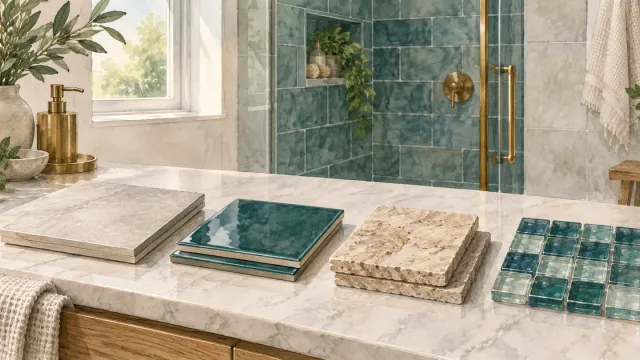
Large-format porcelain tile, quartz countertops, and quality painted cabinetry are popular for good reason: they can be attractive, durable, and relatively easy to maintain. Still, material choices should match the room and the household.
| Material choice | Advantage | Trade-off |
|---|---|---|
| Natural stone countertop | Distinctive character and veining | More maintenance than porcelain or quartz |
| Matte black fixtures | Strong, current visual statement | Shows water spots more readily than brushed nickel |
| Highly textured floor tile | Improves traction underfoot | Rougher surfaces can be harder to clean |
| Large-format porcelain tile | Durable, low-maintenance, fewer grout lines | Higher material cost, precise installation needed |
Understanding these trade-offs helps homeowners choose finishes they will appreciate after the novelty wears off. A simple palette usually gives a dated bathroom the longest-lasting update. Warm whites, soft grays, muted greens, natural wood tones, and classic metal finishes can provide flexibility as adjacent rooms change over time. Personality can come through in a tiled accent, wallpaper in a powder room, hardware, or a distinctive mirror rather than committing the entire room to a short-lived trend.
Do Not Ignore Ventilation and Moisture Control
Fogged mirrors, peeling paint, musty odors, and recurring mildew point to poor ventilation or an undersized exhaust fan, and a beautiful bathroom will not stay beautiful until that gets fixed. A bathroom update is an ideal time to evaluate the fan, ducting, insulation, and any signs of water damage.
Showers require proper waterproofing beneath the tile, not just attractive grout and caulk at the surface. This is one area where craftsmanship matters deeply, because correcting hidden moisture problems after a remodel is far more disruptive than doing the work correctly from the start. The Home Ventilating Institute publishes sizing guidance for bathroom exhaust fans that is worth checking against your room's square footage before assuming the existing fan is adequate.
In Minnesota, seasonal temperature swings make good ventilation and insulation especially worthwhile — a fan that's undersized for the room shows up faster here, through condensation on cold windows and mirrors, than it would in a milder climate. The goal is not only a more comfortable room, but also better protection for the structure around it.
Know When a Refresh Is Enough
A targeted refresh is the right call when the layout works, the fixtures are in good condition, and there are no moisture concerns. New paint, a vanity, updated hardware, lighting, a mirror, and a faucet can bring an older room forward without the cost and timeline of a full renovation — see our guide to planning a bathroom remodel for a closer look at that approach.
A full remodel is more appropriate when multiple elements are failing or when the room no longer serves your household. Cracked tile, recurring leaks, insufficient electrical capacity, poor accessibility, and an inefficient layout are all reasons to look beyond cosmetic changes.
| Scope | Best when | Typical scope of work |
|---|---|---|
| Targeted refresh | Layout works, no moisture issues, fixtures are sound | Paint, vanity, hardware, lighting, mirror, faucet |
| Full remodel | Multiple systems are failing or the layout no longer fits the household | Plumbing, waterproofing, electrical, layout changes, all finishes |
The right scope depends on your goals, your home's condition, and how long you expect to enjoy the space. An experienced remodeling team can help clarify what is necessary now, what can wait, and where an investment will make the greatest difference.
Work With a Team That Communicates Clearly
Bathroom remodeling involves coordination between design decisions, material selections, permits when required, plumbing, electrical work, and installation. Clear communication is what turns that complexity into a manageable experience for homeowners.
Look for a licensed and insured contractor who listens to your concerns, explains the work in plain language, and provides clear expectations around the scope, schedule, and cost. A trustworthy partner should be candid about existing conditions and potential changes, rather than making promises that overlook the realities of an older home.
Frequently Asked Questions
How do I know if my bathroom needs a refresh or a full remodel?
Start with condition, not age. If the layout works, the fixtures are sound, and there is no sign of moisture damage, a targeted refresh of paint, vanity, lighting, and hardware is usually enough. If plumbing, waterproofing, or the layout itself is failing, a full remodel will hold up better over time.
What is the most cost-effective way to update a dated bathroom?
Replacing the vanity, mirror, light fixture, hardware, and faucet delivers the most visible change for the least disruption, since none of it typically requires moving plumbing or reframing walls. Pair that with a fresh, simple paint palette for the biggest visual return.
Do I need a permit to update a bathroom in Minnesota?
Cosmetic changes like paint, a vanity swap, or new lighting on existing circuits generally do not require a permit. Work that touches plumbing, moves electrical circuits, or changes the room's structure typically does, so confirm requirements with your local building department or contractor before work begins.
Can I update the lighting without a full electrical rewire?
Often, yes. Swapping fixtures on existing circuits is straightforward, but adding new sconces, a dimmer, or shower-rated lighting where none existed may require new wiring. A contractor can tell you quickly which upgrades fit your current electrical setup.
How long does a bathroom update typically take?
A cosmetic refresh limited to paint, a vanity, and lighting can often be completed in a few days to about a week. A full remodel involving plumbing, waterproofing, and layout changes typically takes several weeks, depending on the scope and any structural work involved.
At Honey-Doers, the goal is to help homeowners make confident decisions with quality craftsmanship, honest guidance, and no hidden costs or surprises. Whether your bathroom needs a focused update or a complete redesign, the best first step is a conversation about how you want the room to work for your family in the years ahead. Contact us to talk through your bathroom update.