A bathroom tile sample can look perfect under showroom lighting and still be the wrong choice for a busy family bath, a steamy primary shower, or an older home with an uneven floor. Knowing how to choose bathroom tile materials means looking beyond color and pattern. The right decision balances water exposure, traction, maintenance, installation requirements, and the way your household actually uses the room.
For Twin Cities homeowners, tile is often a long-term investment made during a larger bathroom renovation. A thoughtful material selection helps protect that investment, supports everyday comfort, and avoids the frustration of a beautiful surface that is difficult to clean or unsuitable for its location.
- Start With Where the Tile Will Go
- How to Choose Bathroom Tile Materials by Type
- Compare Bathroom Tile Materials at a Glance
- Put Safety Ahead of a Glossy Finish
- Consider Cleaning, Grout, and Daily Life
- Budget for the Complete Installation
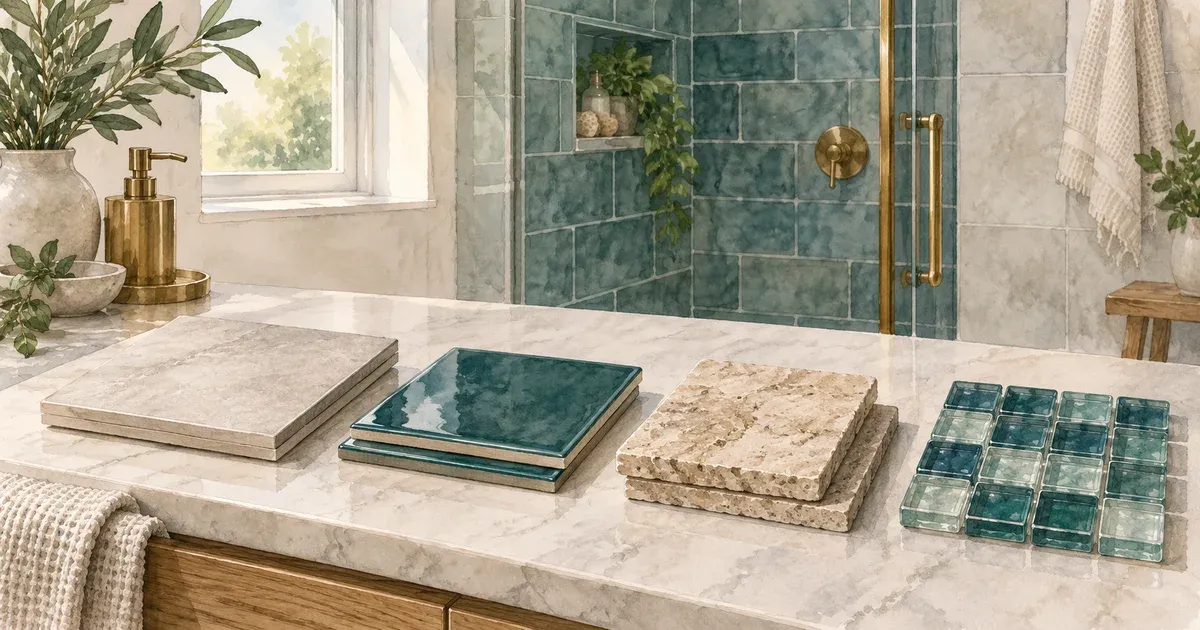
- Bring Samples Into the Actual Bathroom
- Frequently Asked Questions
Start With Where the Tile Will Go
Not every bathroom surface faces the same conditions, so the starting question is where the tile is going, not what it looks like. Floor tile needs to handle foot traffic, standing water, dropped toiletries, and regular cleaning. Shower floors need more traction than most other areas. Shower walls need strong water resistance, while a vanity backsplash can allow more freedom for decorative materials.
Before comparing samples, divide the room into practical zones: the main floor, shower floor, shower walls, tub surround, backsplash, and any accent wall. A material that works well on a wall may not be rated for flooring. Likewise, a polished finish that looks refined on a backsplash can become slippery under wet feet.
This is also the right time to think about who uses the bathroom. A hall bath shared by children, a guest bath, and an aging-in-place primary bath may call for different priorities. For many households, a slip-resistant floor and easy-care grout offer more daily value than a highly specialized statement finish. The NKBA Bath Planning Guidelines are a useful reference for matching material choices to how a bathroom will actually be used.
How to Choose Bathroom Tile Materials by Type
Each tile material has a place in bathroom design, and the best option depends on the surface, your maintenance preferences, and the look you want to achieve.
Porcelain: A Dependable Choice for Most Bathrooms
Porcelain is a popular choice for bathroom floors and shower walls because it is dense, durable, and highly water-resistant. It is available in a wide range of colors, shapes, and realistic stone- and wood-look finishes, making it adaptable to both traditional and contemporary homes.
For a bathroom floor, matte or textured porcelain is usually more practical than polished porcelain. Look for a tile rated for floor use and designed to provide traction in wet areas. Porcelain is also a strong choice for shower walls because it requires little ongoing maintenance compared with many natural materials.
Its trade-off is installation. Porcelain can be harder to cut than standard ceramic, and large-format pieces require a properly prepared, flat substrate. Professional installation helps prevent lippage, cracked tiles, and uneven grout lines.
Ceramic: Practical for Walls and Lower-Traffic Areas
Ceramic tile is often a budget-friendly option for backsplashes, tub surrounds, and bathroom walls. It comes in an enormous range of glazed colors and decorative styles, including classic subway tile, handmade-look finishes, and smaller accent shapes.
Ceramic can work on a bathroom floor when it carries the appropriate floor rating, but porcelain is generally the better fit for heavily used or consistently wet floors, since its density gives it much lower water absorption than standard ceramic (Houzz's porcelain-versus-ceramic comparison walks through the scenario-by-scenario differences). If you are choosing ceramic, confirm the specific product is approved for the intended application rather than assuming all ceramic tile performs the same way.
Natural Stone: Beautiful, With More Responsibility
Marble, travertine, limestone, slate, and granite bring natural variation that manufactured tile cannot fully duplicate. Stone can make a primary bath feel warm, established, and distinctly personal, especially in homes where classic materials suit the architecture.
The trade-off is maintenance, and it is worth being direct about it in the Twin Cities. Natural stone generally needs sealing, and some varieties are more vulnerable to etching, staining, or moisture-related discoloration. Local tap water runs hard across much of the metro, and the mineral deposits it leaves behind can etch polished marble and dull honed stone faster than a softer-water region would. Polished marble can show water spots and is not always the best choice for a wet floor. Honed finishes provide a softer appearance and may offer better traction, but they still need appropriate care and periodic resealing.
Stone is a good fit for homeowners who appreciate its character and are comfortable following a maintenance routine. It is less ideal for those who want a low-maintenance bathroom that can handle quick, everyday cleaning with minimal concern.
Glass and Specialty Tile: Best Used With Intention
Glass tile reflects light beautifully, which makes it especially useful for backsplashes, shower-wall accents, and smaller decorative areas. It can brighten a compact bathroom and add visual depth without introducing a busy pattern across the whole room.
Because it can be slippery and may be more prone to chipping, glass is not usually the first choice for a main bathroom floor. Installation also matters. Glass requires compatible setting materials and careful handling so the finished surface looks even and stays secure.
Cement tile, encaustic-look porcelain, and handmade-look ceramic can provide personality in a powder room or as a feature area. Authentic cement tile has a distinctive matte character, but it is porous and requires sealing. A porcelain alternative can deliver a similar visual effect with easier maintenance.
Compare Bathroom Tile Materials at a Glance
Each material trades durability, comfort, and upkeep differently, and seeing them side by side makes the right zone-by-zone pairing easier to spot.
| Material | Best For | Water Resistance | Maintenance | Relative Cost |
|---|---|---|---|---|
| Porcelain | Floors, shower walls | Excellent | Low | $–$$ |
| Ceramic | Backsplash, tub surround, walls | Good | Low | $ |
| Natural Stone | Accent walls, primary baths | Fair to good | High | $$–$$$ |
| Glass | Backsplash, shower accents | Excellent | Medium | $$ |
Put Safety Ahead of a Glossy Finish
Bathroom floors should feel secure under wet feet, and that priority should come before finish or color. This is especially true near showers, tubs, and vanities, where water tends to collect. Ask about the tile's slip-resistance rating and whether the manufacturer recommends it for wet interior floors.
Tile size affects safety, too. Large-format tile can create a clean, open look with fewer grout lines, but smaller tiles are often a smarter choice for shower floors. The added grout joints improve grip and make it easier to slope the floor correctly toward the drain.
For a main bathroom floor, a textured porcelain tile or a matte finish often provides a comfortable balance of safety and style. Minnesota winters add a comfort factor as well: an uninsulated slab or an upper-level bathroom over an unheated space can leave hard tile genuinely cold underfoot for months at a time, which is why many Twin Cities remodels budget for electric radiant floor heating under tile rather than treating it as a luxury add-on. If mobility is a concern now or may become one later, safety and comfort are worth deciding early in the design process rather than trying to solve after installation.
Consider Cleaning, Grout, and Daily Life
Grout is the part of the tile plan most likely to determine how the bathroom actually looks a year in, so it deserves as much thought as the tile itself. A white grout line around a white tile can look crisp, yet it may show discoloration more readily on a busy floor or shower. Mid-tone grout can be a practical choice for family bathrooms, while carefully selected contrasting grout can define a wall pattern without adding much maintenance burden.
Grout width should complement the tile and the room. Rectified porcelain can be installed with tighter joints, while handmade or dimensional tile usually needs more space for variation. In showers, using a quality grout and maintaining sound caulk joints where walls meet floors, tubs, or countertops helps keep the finished bathroom looking cared for.
Acidic or abrasive cleaners can damage natural stone and some specialty finishes. If straightforward cleaning is a priority, porcelain paired with a stain-resistant grout is difficult to beat.
Budget for the Complete Installation
A tile's price per square foot is only one part of the cost. Installation can vary considerably based on tile size, pattern, surface preparation, demolition, waterproofing, cuts, trim pieces, and the condition of the existing subfloor or walls.
For example, a simple porcelain tile may cost less than natural stone, but a herringbone layout, oversized format, or detailed niche can increase labor. Small mosaic tile can be ideal for a shower floor, yet it takes more time to install and grout. These are not reasons to avoid those choices — they are reasons to plan for them honestly from the start.
In a shower, waterproofing behind and beneath the tile matters as much as the visible finish. Tile and grout are not waterproof on their own. A well-built shower system, correctly sloped floor, and careful detailing around niches and fixtures protect the home from hidden moisture damage.
Bring Samples Into the Actual Bathroom
Showroom lighting flatters almost everything, so the real test happens at home. Take a few final samples home and view them in morning light, evening light, and with the room's planned vanity finish, paint color, and countertop. A tile that appears warm under one light source may read cooler or grayer in your home.
Consider scale as well. A bold patterned tile can be striking in a small powder room, while a busy design across a large primary bath may compete with other finishes. If you are uncertain, use a timeless field tile for the larger surfaces and add personality through a niche, backsplash, or accent wall that can be updated more easily later.
A good tile plan should make your bathroom feel like it belongs in your home while standing up to real life. Our team at Honey-Doers has walked Edina and south metro homeowners through this exact decision during full bathroom remodels, weighing zone, safety, and budget together before materials are ever ordered.
Frequently Asked Questions
What is the best tile for a shower floor?
Small-format porcelain mosaic is usually the best combination of safety and durability. The added grout lines from smaller pieces improve traction and make it easier to slope the floor correctly toward the drain, while porcelain resists water and staining better than most alternatives.
Do I need to seal bathroom tile?
Porcelain and most glazed ceramic do not need sealing. Natural stone almost always does, both at installation and on a recurring schedule afterward, since it is more porous and more vulnerable to hard water etching and staining without it.
Is large-format tile a good choice for a small bathroom?
It can be, since fewer grout lines create a cleaner, more open look. The trade-off is that large-format tile requires a very flat substrate to install correctly and is less ideal for shower floors, where smaller tile provides better traction and slope control.
How much does bathroom tile installation cost?
Installation typically costs as much as or more than the tile itself, and the total depends heavily on layout complexity, tile size, and existing subfloor or wall condition. A simple field tile with a straightforward layout costs meaningfully less to install than a herringbone pattern, oversized format, or mosaic shower floor.
The most satisfying bathrooms are not built around the trendiest sample board. They are built around materials that feel right underfoot, clean up without a fight, and continue to earn their place every morning after the renovation is complete. Contact us today to talk through tile options for your bathroom remodel.