A full roof replacement in Minnesota cost between $17,600 and $44,700 across a sampling of our jobs since late 2022, from across the metro and beyond, with a median of about $29,700. Most landed between $23,600 and $31,700. Those are total job prices from our own records, permits included, not a national average. The size of the roof, how much decking and flashing has to be replaced, and whether an insurance claim is paying for it explain most of the spread.
National cost guides usually quote a per-square-foot range and stop there. This guide uses what our jobs actually cost, says where the number came from, and shows what pushed some roofs above the median.
- What Our Roof Replacements Have Cost
- What Moves the Price Up or Down
- Cost Per Square: How a Roof Gets Priced
- When Insurance Pays for the Roof
- Permits and Licensing in Minnesota
- Repair or Replace?
- Frequently Asked Questions
What Our Roof Replacements Have Cost
The replacements below are a sampling from our job records, and they ranged from $17,610 to $44,718. Every scope that names a material is an asphalt shingle roof, and several included a garage. Here is each job by year, city, and what set the price (measured, from our JobTread records; prices are the final invoiced totals).
| Year | Where | Scope | Priced from | Price |
|---|---|---|---|---|
| 2022 | Shakopee | Reroof per adjuster estimate, dumpster | Insurance claim scope | $30,874 |
| 2022 | Minnetonka | House and garage, about 34 squares, GAF shingles | Our itemized bid | $21,804 |
| 2023 | Lakeville | Reroof per claim scope, Tamko Titan shingles | Insurance claim scope | $23,604 |
| 2023 | Farmington | Reroof per claim scope, Owens Corning shingles | Insurance claim scope | $31,667 |
| 2023 | Shakopee | Reroof per claim scope, permit | Insurance claim scope | $30,922 |
| 2023 | Minneapolis | Reroof per claim scope, CertainTeed Landmark | Insurance claim scope | $28,514 |
| 2023 | Rosemount | Roofing and debris removal portion of a hail claim | Insurance claim scope | $17,610 |
| 2024 | Northern Minnesota | House and garage, about 53 squares, Class 4 shingles | Our itemized bid | $24,200 |
| 2024 | Minneapolis | Reroof per claim scope | Insurance claim scope | $44,718 |
| 2026 | Inver Grove Heights | Reroof and new 5-inch gutters per claim | Insurance claim scope | $34,683 |
Treat the median as a reference point, not a quote. It does answer the question homeowners ask most often once they have a number in hand: is $30,000 a normal price for a new roof here? On our jobs, it sits right in the middle.
When siding is replaced along with the roof, the job gets bigger fast. In Shakopee, we completed seven combined roof-and-siding jobs between 2023 and early 2024, priced from $30,100 to $72,200.
What Moves the Price Up or Down
Roof size is the biggest single factor, followed by the condition of what sits under the shingles. The items that most often separate a $20,000 roof from a $40,000 one:
- Total area. A house plus a garage, a big footprint, or a lot of dormers all add squares. Our two itemized bids were for 34 and 53 squares.
- Pitch. A steep roof takes longer to work, needs more safety setup, and uses more material for the same footprint.
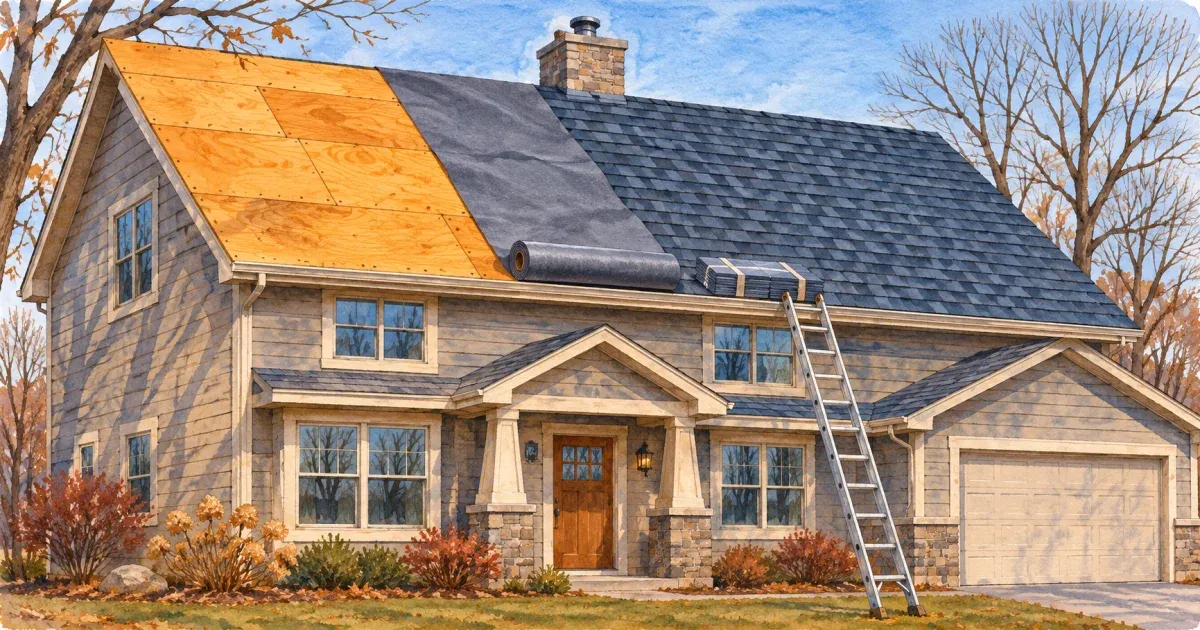
- Layers and decking. Every existing layer has to come off and go to a dumpster. Soft or rotted decking found during the tear-off gets replaced before anything new goes down.
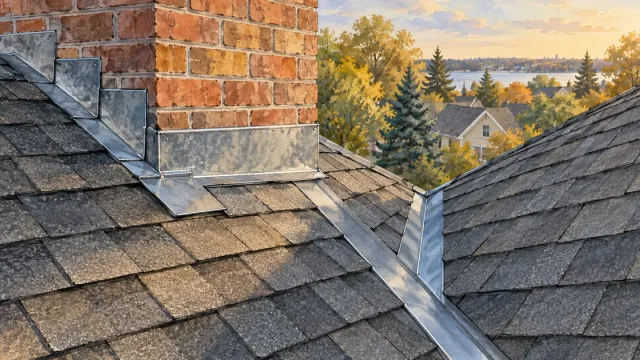
- Penetrations and flashing. Chimneys, skylights, plumbing vents, and exhaust vents each need flashing or a new boot. Our itemized bids listed new pipe jacks, vents, drip edge, and flashing repairs.
- Ice and water barrier. Minnesota roofs need a self-adhering membrane at the eaves where ice dams form. Both of our itemized bids list ice and water shield "to code." If ice dams are part of why you are reroofing, read how to prevent ice dams first, since the cause is usually attic heat, not the shingles.
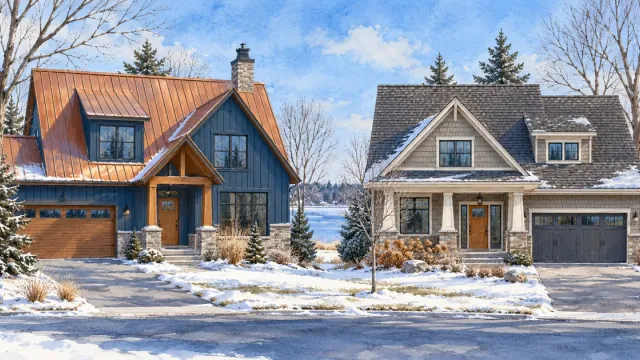
- Shingle line. Standard architectural shingles cost less than impact-resistant Class 4 lines. On the 53-square job, the homeowner chose Class 4 shingles, and it still came in lower per square.
- Ventilation fixes. A reroof is the cheapest time to correct soffit and ridge venting. Our guide to checking roof ventilation covers what we look for.
- Gutters and trim. The 2026 Inver Grove Heights job included new 5-inch aluminum gutters, which is part of why it ran above the median.
The Minneapolis job at $44,718 was the largest in this sampling. Claim scopes like that one are itemized line by line by the insurer, so a bigger price usually means more squares, a steeper roof, or more damaged components, not a different rate for the same work.
Cost Per Square: How a Roof Gets Priced
Roofers price by the square, which is 100 square feet of roof surface. A roof with 2,500 square feet of surface is a 25-square roof, and the quote is built from that count plus the extras listed above.
Our two itemized bids give a rough per-square figure (measured, n=2, so read it loosely):
| Job | Squares | Shingle | Roofing price | Per square |
|---|---|---|---|---|
| 2022 house and garage | About 34 | GAF architectural | $20,600 | About $610 |
| 2024 house and garage | About 53 | Class 4 impact-resistant | $24,200 | About $460 |
The larger roof came in lower per square even with a better shingle. Part of that is likely scale: setup, the dumpster, and the permit cost about the same whether a roof has 30 squares or 50, so they add less to each square on a bigger roof (inferred, not measured). Prices also move year to year with material costs, so a quote today should be compared against current written bids, not these two numbers alone.
Floor area is not roof area. A roof covers the overhangs too, and pitch adds surface. A 6/12 pitch, which rises 6 inches for every 12 inches across, has about 12% more surface than its flat footprint. That is why a 1,500-square-foot house can carry a 19- or 20-square roof, and a two-story house can have less roof than a ranch with the same living space.
Before a number goes on paper, someone should look at the roof and the attic. As Adam Berres puts it: "Our inspection usually begins from the exterior, looking to see what the existing ventilation looks like." From there the crew moves inside and checks the attic for moisture, active or old, since that changes the scope.
When Insurance Pays for the Roof
Most of the replacements in this sampling were paid through an insurance claim, most of them for hail or storm damage. On those jobs, the insurer's adjuster writes an itemized scope, the approved scope sets the price, and the homeowner pays the deductible. That is why claim jobs list a claim number and line items rather than a per-square bid.
Minnesota law sets clear limits for contractors on claim work. Under Minn. Stat. § 325E.66, a residential contractor may not:
- Pay or promise to pay any part of your deductible, or offer you anything in exchange for an inspection, a claim, or a referral.
- Have you sign an agreement authorizing repairs without also giving you a good faith, itemized estimate.
- Interpret your policy, advise you on coverage, or adjust the claim for you, unless licensed as a public adjuster.
The same section requires the contractor to give you written notice of these rules with its initial estimate. A contractor who offers to "take care of the deductible" is offering to break state law, and the insurer can then refuse to consider that contractor's estimate. Questions about what your policy covers go to your agent or adjuster. Our post on what to do after storm damage covers documenting the damage before anyone gets on the roof.
Permits and Licensing in Minnesota
Every city on our reroof jobs required a permit, and the fee varies more than people expect. On our 2023 jobs, the reroof permit cost $71 in Farmington, $548 in Minneapolis, and $756 in Shakopee. A permit usually comes with an inspection, which is one more set of eyes on the work.
Licensing matters just as much. The Minnesota Department of Labor and Industry requires residential contractors who do roofing to hold a residential roofer, building contractor, or remodeler license. A roofer-only license does not cover gutters, downspouts, soffit, or fascia, so a job that includes those needs a building contractor or remodeler license. Honey-Doers holds a residential building contractor license, which covers the roof and the trim and gutter work around it. Check any contractor's number on DLI's license lookup before you sign.
Repair or Replace?
Many roof problems are repairs, not replacements, and they cost far less. From our records (measured, single jobs, so ranges are wide):
- Roof repair service calls: $150 to $160
- A replacement pipe jack boot: about $300
- A replacement roof vent: $352 to $450
- A chimney cap plus investigation work: about $1,400
- Larger chimney repairs: about $7,400
Replacement makes sense when the shingles are near the end of their life across the whole roof, when hail has bruised most of the surface, or when leaks keep coming back in different places. If you are unsure where your roof falls, our list of signs you need a new roof is a good place to start, and our comparison of metal roofs and asphalt shingles covers the material choice. Either way, leave the climbing to a crew with fall protection; roofing is not a DIY job.
Frequently Asked Questions
How much does a new roof cost in Minnesota?
A sampling of our full replacements since 2022 cost $17,600 to $44,700, with a median near $29,700. Most fell between $23,600 and $31,700. Size, pitch, decking repairs, and whether gutters are included explain most of the difference.
Is $30,000 too much for a roof?
Not for a typical Twin Cities house. $30,000 is right around the median of our replacements. Compare it with other written bids for the same scope, same shingle line, and same square count before deciding.
How much does a roof cost for a 1,500 or 2,000 square foot house?
Start by converting floor area to roof area. A 1,500-square-foot ranch with a moderate pitch and normal overhangs is often around 19 to 20 squares, while a 2,000-square-foot two-story can be smaller than that. Multiply the square count by the per-square price on your written bids, then add decking, flashing, and permit items.
Can a roofing contractor pay my insurance deductible?
No. Minnesota law bars residential contractors from paying, waiving, or promising to cover any part of a deductible, and from offering anything in exchange for an inspection or a claim. The homeowner pays the deductible.
When is the best time to replace a roof in Minnesota?
Late spring through fall is the main season, since shingles need warm enough weather to seal. Our records include reroofs invoiced in November and December, so the season runs later than many people expect when the weather cooperates. Book early after a big hail year, when crews fill up.
A roof is a large number, and it is easier to judge once you know what your square count is and what is under the shingles. If you want us to look at yours, talk to us about your roof. We work across Lakeville, Rosemount, and the rest of the South Metro.