A kitchen can feel tired long before it stops working. When the cabinet boxes are sound but the doors, finishes, and hardware belong to another decade, refacing is worth a closer look — it can give a functional kitchen a dramatic visual update while keeping good cabinet boxes in place. Refacing isn't the right call for every kitchen, though, and the difference between a great outcome and a wasted budget usually comes down to an honest assessment before work begins.
- What Cabinet Refacing Actually Changes
- When Refacing Makes Sense
- When Replacement Is the Better Investment
- Don't Let New Doors Hide a Bigger Problem
- How to Judge Quality Before You Commit
- Comparing Cost by Scope, Not a Single Number
- A Practical Way to Choose
- Questions to Ask During a Refacing Consultation
What Cabinet Refacing Actually Changes
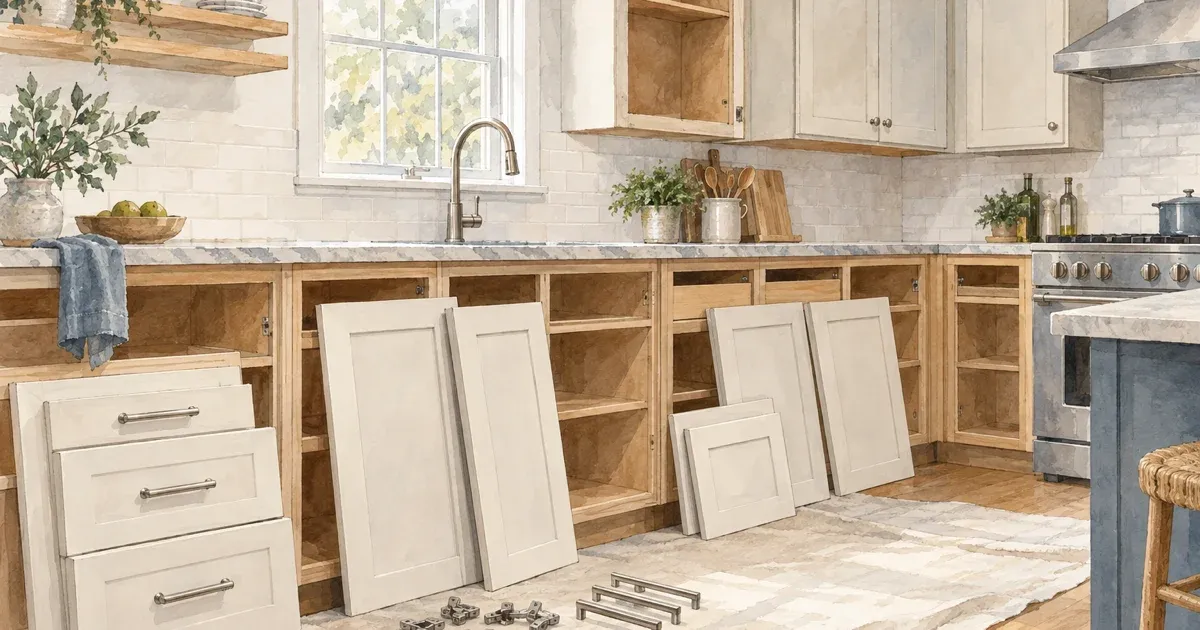
Refacing keeps the existing cabinet boxes in place. A remodeler applies a new veneer or surface material to the visible exterior frames, then installs new doors, drawer fronts, hinges, and usually new hardware. Homeowners can typically choose from wood veneers, rigid thermofoil, laminate, and painted or stained door styles, depending on the cabinet system and desired look.
Because the footprint stays the same, refacing is less disruptive than gutting and replacing every cabinet, and it can preserve flooring, countertops, and walls that aren't part of the scope. A skilled installer still needs to make precise adjustments, particularly where older cabinet boxes aren't square, level, or consistent in size — a Twin Cities kitchen from the 1960s or 70s often has all three problems at once.
Refacing updates the face of the kitchen, not its underlying structure. If the current layout lacks a pantry, has cramped work zones, or puts the dishwasher somewhere inconvenient, new doors alone won't fix any of that.
When Refacing Makes Sense
Refacing tends to work best when the cabinet boxes are sturdy, the layout already works, and the main complaint is how the kitchen looks. Many established South Metro homes have well-built original cabinetry that reads as dated but still provides the storage and function the household needs — tearing that out to buy the same layout back in new materials is money that could go toward finishes instead.
If your kitchen was built before 1978, any sanding or stripping of old cabinet finishes as part of prep work can disturb lead-based paint. The EPA's Renovation, Repair and Painting rule requires certified lead-safe practices for exactly this kind of work — ask your contractor how they handle it before signing anything.
It's especially practical for updating worn finishes, exposed hinges, or a dated raised-panel style without turning the kitchen into a construction zone. New shaker doors, soft-close hardware, updated pulls, and a well-chosen finish can materially change the room's character in a matter of days rather than weeks.
Refacing also fits well inside a focused scope — keeping a functional layout while adding a new countertop, backsplash, sink, and lighting can produce a coordinated result. That said, an attractive new cabinet finish tends to make an old laminate countertop or poorly placed lighting stand out more, not less, so plan those pieces together rather than one at a time.
When Replacement Is the Better Investment
A few conditions rule refacing out entirely. Cabinet boxes with water damage, sagging shelves, delaminating particleboard, pest damage, or broken structural connections shouldn't be covered up with a new face — that's a repair deferred, not solved. The same is true for cabinets that have been altered repeatedly and no longer provide a reliable base for new doors and drawer fronts.
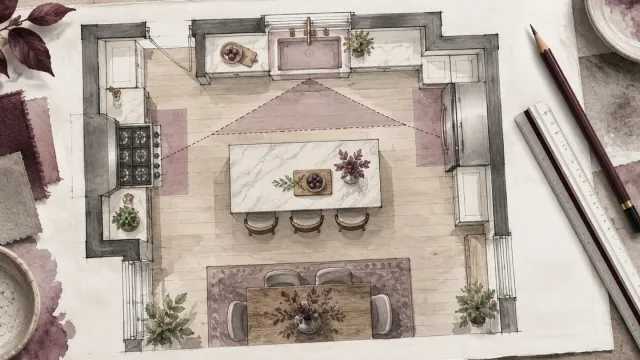
Layout limitations matter just as much as condition. A kitchen that's short on prep space, needs more drawers, wants an island, or makes it awkward to move between the refrigerator, sink, and range usually needs a different floor plan more than it needs new doors. Full replacement gives you the freedom to reconfigure storage, improve traffic flow, add roll-out shelves, and accommodate new appliance placement — refacing can't touch any of that.
There's a middle ground worth knowing about, too: some kitchens reface most of the cabinets while replacing a damaged section, adding a pantry cabinet, or modifying a base cabinet for a new appliance. It takes careful planning so the finishes and proportions look intentional rather than pieced together, but it can capture most of refacing's savings without forcing a compromise on a section that genuinely needs replacing. For a deeper look at where refacing specifically goes wrong, see our breakdown of common refacing problems and how to avoid them.
| Refacing | Replacement | |
|---|---|---|
| Best for | Sound boxes, layout already works, cosmetic update | Damaged boxes, layout doesn't work, storage needs change |
| Typical cost vs. full replacement | Roughly 40–50% less | Full cost |
| Disruption | Kitchen stays functional during the work | Kitchen is out of commission for the duration |
| Layout changes | None — footprint is fixed | Full reconfiguration possible |
| Interior storage upgrades | Limited to what fits the existing box | Unlimited |
Don't Let New Doors Hide a Bigger Problem
New cabinet fronts change how a kitchen looks, not how it performs, so any problem outside the cabinet faces survives a refacing job untouched. Dim prep areas stay dim if the under-cabinet lighting plan stays the same. A narrow aisle still makes it hard for two people to cook at once. A slow leak at the dishwasher or under the sink keeps soaking the base cabinet behind a brand-new door, and now it's ruining new materials too.
Look past the cabinets before you settle on a scope. Worn flooring, weak range ventilation, too few outlets along the counter, or a panel with no room for new circuits are all reasons to widen the conversation. In a Minnesota kitchen that's closed up most of the winter, poor ventilation shows up as grease film and condensation on the very surfaces you just paid to update.
None of this means every dated kitchen needs a full rebuild. It means the scope should match the condition of the room, and a good remodeler will tell you plainly when refacing fits and when it would only cover a functional problem for a few more years.
How to Judge Quality Before You Commit
Refacing quality shows up in the details. Doors should hang evenly, gaps should be consistent, and drawer fronts should align cleanly. Veneer or laminate surfaces should be firmly bonded with tidy edges and no lifting at the corners. Hardware should operate smoothly and hold up to daily use, not just look good on day one.
Material choice deserves more attention than most homeowners expect going in. Natural wood offers warmth and is repairable over time, but color variation is part of the material, not a defect. Thermofoil can deliver a clean, consistent painted look, though its long-term performance depends on product quality and exposure to heat near the range. Laminate is durable and low-maintenance, and today's finishes are far more convincing than they were even a decade ago. No single material is right for every kitchen.
Ask to see completed work similar in age, style, and scope to your own project. Photos help, but an experienced contractor should also be comfortable explaining how they inspect cabinet boxes, prepare surfaces, handle uneven framing, and protect nearby finishes during the work. The NKBA's kitchen planning guidelines are a useful reference if you want to sanity-check clearances and storage standards independent of what any one contractor tells you.
Comparing Cost by Scope, Not a Single Number
Refacing generally costs 40–50% less than full cabinet replacement, but it isn't automatically the cheap option in every case. Custom doors, premium finishes, specialty storage accessories, cabinet modifications, and countertop work can push the investment much closer to a replacement project. That doesn't make refacing a bad value — it means the comparison needs to be complete rather than a single headline number. The JLC Cost vs. Value report tracks return on investment for major remodeling categories, including kitchens, and is a reasonable outside benchmark for whether a given scope is in a normal range.
A meaningful proposal should spell out what's included — door and drawer-front materials, frame surfacing, hinges, pulls, drawer upgrades, trim, cabinet repairs, disposal, site protection, and final adjustments — and what isn't, such as electrical work, plumbing changes, wall repairs, or countertop replacement. Be cautious of an estimate that sounds unusually simple; a price without a detailed scope creates uncertainty once the project is underway, including what happens if hidden water damage or cabinet instability turns up mid-job.
A Practical Way to Choose
The simplest way to decide is to write two short lists before you look at a single door sample: what you want to change about how the kitchen looks, and what you want to change about how it works. If the first list is much longer, refacing will probably deliver what you're after. If the second list includes traffic flow, storage, appliance placement, counter space, or accessibility, replacement is more likely to be worth it. Narrow and small kitchens are where the second list tends to run long.
Think about your time horizon too. If you plan to stay for many years and the layout frustrates you daily, the larger project usually pays for itself in how the room works. If the layout is fine and you want a meaningful visual change with less disruption, refacing is a sound use of the budget.
Bring both lists to an in-home consultation. Measurements, a look inside the cabinet boxes, and a conversation about how your household uses the room will produce a more reliable recommendation than comparing photos online.
Questions to Ask During a Refacing Consultation
The right questions quickly reveal whether a contractor is evaluating your kitchen carefully or just selling doors. Before signing an agreement, ask:
- Are my existing cabinet boxes structurally suitable for refacing, and why?
- Which materials do you recommend for my kitchen's wear, moisture, and heat exposure?
- Can you modify cabinets for better storage or new appliances if needed?
- What work happens on site, and how will dust and daily kitchen access be managed?
- How are change requests and hidden conditions handled if something turns up once work starts?
A reliable process includes accurate field measurements, approved door samples or finish selections before installation begins, a realistic schedule, and a single clear point of contact from measurement through the final walkthrough.
For homeowners in Eden Prairie and the rest of the South Metro, it also helps to work with a team that thinks about how a kitchen update connects to future work elsewhere in the home, rather than treating the cabinets as an isolated project. Honey-Doers approaches these decisions with a practical focus on craftsmanship, clear communication, and a scope that matches how you actually use the kitchen.
Ready for a kitchen update that includes new cabinet faces? Contact us for a free consultation.