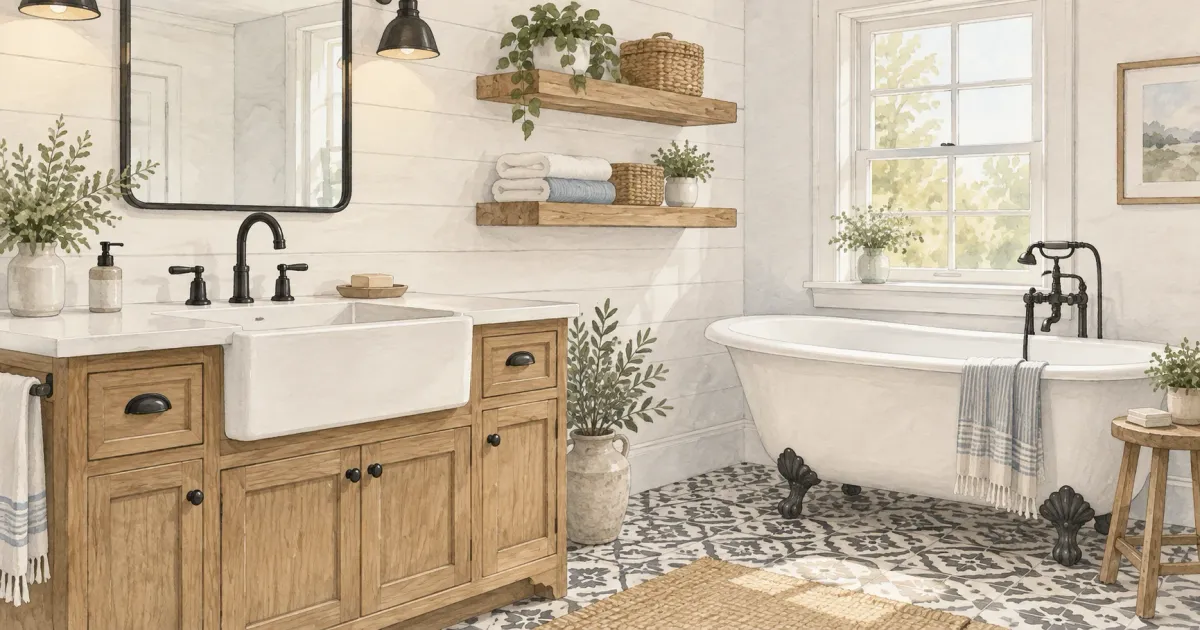
A farmhouse bathroom pairs natural materials — wood, stone, and matte black metal — with a neutral color palette and a handful of vintage-inspired fixtures, so the room reads as warm and lived-in rather than cold and clinical. The style works because it doesn't chase trends: a farmhouse sink or a reclaimed wood vanity looks as much at home in a 1920s bungalow as it does in new construction.
The nine ideas below aren't a mood board — they're the specific fixtures, materials, and layout choices that make a farmhouse bathroom remodel actually function, not just photograph well.
- What Makes a Bathroom Read as Farmhouse
- Farmhouse Sink
- Freestanding or Clawfoot Tub
- Black Metal Fixtures and Hardware
- Shiplap or Board-and-Batten Walls
- Reclaimed Wood Vanity
- Barn-Style Sliding Door
- Vintage-Inspired Lighting
- Open Shelving with Woven Baskets
- Patterned Tile Floor with a Neutral Palette
- What a Farmhouse Bathroom Remodel Typically Costs
- Frequently Asked Questions
What Makes a Bathroom Read as Farmhouse
The style traces back to the plain, functional bathrooms of early-20th-century rural homes — locally sourced materials, no ornamentation for its own sake, everything built to be used. The modern farmhouse look keeps that restraint but pairs it with contemporary plumbing and finishes, which is why it tends to age better than more trend-driven styles: a farmhouse sink and shiplap wall don't look dated the way a specific paint color or cabinet hardware finish eventually does.
Three things separate a farmhouse bathroom from a generic "rustic" one: a genuinely neutral palette (white, cream, soft gray, not beige-with-brown-accents), at least one true vintage or vintage-inspired fixture rather than a print or sign doing the work, and hardware finishes — faucets, cabinet pulls, light fixtures — that stay consistent throughout the room instead of mixing chrome, brass, and black.
Fixtures That Set the Farmhouse Tone
Farmhouse Sink
A farmhouse sink, sometimes called an apron-front sink, is the fixture most people picture first — a deep basin with an exposed front face that extends slightly past the cabinetry rather than sitting flush behind a countertop lip. Fireclay and porcelain are the two common materials; fireclay costs more but resists chipping and staining better over decades of use. In a bathroom, a smaller farmhouse-style vanity sink (as opposed to the oversized kitchen version) keeps the proportion right for the room.
The trade-off is plumbing: an apron-front sink needs a cabinet built specifically to accommodate its exposed front, so it's a much easier upgrade during a full vanity replacement than as a drop-in swap for an existing cabinet.
Freestanding or Clawfoot Tub
A freestanding tub, whether a modern soaking tub or a true cast-iron clawfoot, does more to establish a farmhouse bathroom's character than almost any other single fixture — it reads as the room's centerpiece the way an island does in a kitchen. Cast iron holds heat longer than acrylic, which matters for a genuine soak, but it's also dramatically heavier; confirm floor structure can support it before committing, particularly in an older home or an upper-level bathroom.
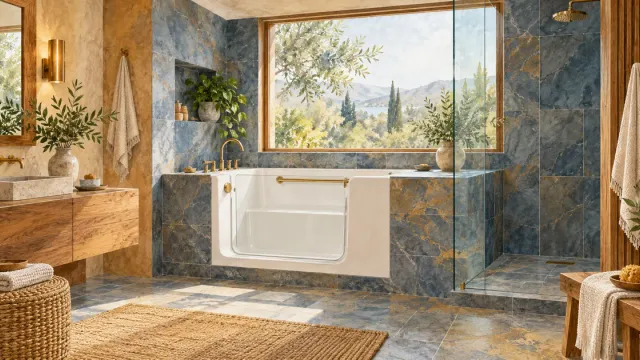
For households where daily accessibility matters more than a vintage soaking tub, our guide to integrating a walk-in tub into a luxury spa bathroom covers how to get the same warm, unclinical look with a fixture built for long-term use.
Black Metal Fixtures and Hardware
Matte black or aged bronze faucets, cabinet pulls, and light fixtures do the most visual work per dollar of anything on this list. Choosing one finish and carrying it through every fixture in the room — faucet, shower hardware, cabinet pulls, mirror frame, light fixtures — is what makes the black-metal look read as intentional rather than mismatched. Gooseneck faucets in particular carry a vintage silhouette that pairs naturally with a farmhouse sink.
Order all black-metal hardware from the same manufacturer where possible. "Matte black" varies enough between brands — some run warmer, some cooler, some with more visible sheen — that mixing sources is one of the most common ways a farmhouse bathroom ends up looking slightly off without an obvious reason why.
Architecture and Materials
Shiplap or Board-and-Batten Walls
Horizontal shiplap or vertical board-and-batten paneling is the fastest way to add farmhouse texture to a flat drywall bathroom. Board-and-batten, run to chair-rail height with paint above, also does practical work in a bathroom: it protects the lower wall from moisture and scuffs better than drywall alone, and it holds up to cleaning better than wallpaper in a high-humidity room. Real wood is the better long-term choice over MDF in any bathroom with a shower, since MDF swells if moisture reaches an unsealed edge.
Reclaimed Wood Vanity
An antique dresser converted into a vanity, or a custom vanity built from reclaimed barn wood, brings genuine age and grain variation that no distressed-finish cabinet fully replicates. If starting from an actual old dresser, confirm the interior can be modified for plumbing and a sink cutout without compromising the structure — a job for whoever's doing the install, not a DIY cut. The NKBA Bath Planning Guidelines outline the minimum clearances around a vanity and sink that a converted piece still has to meet, which is worth checking before falling in love with a specific dresser. Our guide to visualizing a new bathroom vanity walks through the broader set of vanity decisions beyond the reclaimed-wood option.
Barn-Style Sliding Door
A sliding barn door on exposed track hardware is one of the more recognizable farmhouse signatures, and it solves a real space problem in smaller bathrooms where a swinging door eats into usable floor area. It's not the right choice everywhere, though — sliding doors don't provide the same sound or moisture containment as a swinging door, so they work best on a powder room or a secondary bathroom rather than a primary suite where privacy and steam containment matter more.
Lighting, Storage, and Finishing Touches
Vintage-Inspired Lighting
Fixtures shaped like lanterns or schoolhouse globes, paired with Edison-style bulbs, add warmth without requiring any structural changes to the room. The practical rule matters more than the style choice: a bathroom needs layered lighting, not just one fixture. Combine an overhead or vanity light for ambient coverage with a brighter, shadow-free light directly at the mirror for actual grooming tasks — a single vintage pendant looks great and lights almost nothing well on its own.
Open Shelving with Woven Baskets
Open shelving built from reclaimed wood or simple metal brackets keeps storage visible and in character with the rest of the room, and woven or wire baskets on those shelves add texture while keeping loose items like towels and toiletries from looking cluttered. This works best as a supplement to at least some closed storage, not a full replacement for it — everything on an open shelf is on permanent display, so it only stays looking intentional if what's stored there is genuinely presentable.
Patterned Tile Floor with a Neutral Palette
A black-and-white or subtly patterned tile floor — hexagon, penny round, or a simple checkerboard — is one of the more period-accurate farmhouse choices, since patterned floor tile was common in the early-20th-century homes the style draws from. Keeping the pattern confined to the floor, with plain walls and fixtures around it, prevents the room from feeling busy. Our guide to the best flooring materials for a bathroom remodel covers how patterned tile compares to other options on cost and maintenance.
What a Farmhouse Bathroom Remodel Typically Costs
Cost follows scope more than style in a farmhouse bathroom — the aesthetic itself doesn't carry a fixed premium, but several of the fixtures on this list do. A farmhouse sink and matching cabinetry, black-metal hardware throughout, and a cast-iron tub add real cost over builder-grade equivalents, while shiplap walls, open shelving, and lighting changes are comparatively inexpensive ways to shift the room's character without touching plumbing.
A cosmetic-only update — new hardware, paint, open shelving, a lighting swap — can land in the low thousands. A fuller remodel that relocates plumbing for a farmhouse sink or a freestanding tub, adds board-and-batten or tile work, and replaces the vanity typically runs from the mid five figures upward, in line with any bathroom remodel that touches plumbing rough-in and finishes together rather than swapping fixtures in place.
For homeowners in Chaska working with an older farmhouse-era or craftsman home, this style is often less about introducing something new and more about restoring materials and proportions the house already had before decades of updates smoothed them over.
At Honey-Doers, a farmhouse bathroom remodel starts with the fixtures and materials that carry the most character — sink, tub, hardware finish — and builds the rest of the room's decisions around those choices, rather than starting with paint color and working backward. If you're planning a bathroom remodel with a farmhouse direction in mind, reach out to our team to talk through which of these ideas fits your space and budget.
Frequently Asked Questions
What makes a bathroom "farmhouse style"?
A farmhouse bathroom combines natural materials like wood and stone, a neutral color palette, and at least one genuine vintage or vintage-inspired fixture — most often a farmhouse sink or a freestanding tub — with hardware finishes kept consistent throughout the room.
Is a farmhouse bathroom hard to keep updated?
No — it's one of the more durable styles precisely because it doesn't chase trends. A neutral palette and natural materials don't date the way a specific accent color or a trend-driven tile pattern does, which is part of why the style has stayed popular for years rather than cycling out.
Can a small bathroom pull off a farmhouse look?
Yes, with a more selective approach. A smaller farmhouse-scale vanity sink, open shelving instead of bulky cabinetry, and a barn-style sliding door (which saves floor space a swinging door would use) let a small bathroom read as farmhouse without feeling cramped, even without room for a freestanding tub.
Does a farmhouse sink need special plumbing?
An apron-front sink needs a cabinet built to accommodate its exposed front face, which usually means it's installed alongside new or modified cabinetry rather than dropped into an existing vanity. Plan the sink and vanity as one decision, not two separate ones.
What's the difference between farmhouse and modern farmhouse style?
Traditional farmhouse leans further into visibly worn, reclaimed materials — an actual antique dresser vanity, heavily distressed wood. Modern farmhouse keeps the same natural materials and neutral palette but pairs them with cleaner lines and new fixtures rather than literal antiques, which is the more common approach in a full remodel.