We pull the permits and coordinate the inspections. Here is what that involves in Inver Grove Heights.
Where the permit comes from
Inver Grove Heights' City Inspection Department, at 8150 Barbara Avenue. Permit questions go to 651-450-2550 or permits@ighmn.gov. City phone numbers change from time to time — if this one doesn't connect, ighmn.gov/1244/Building-Permits-Inspections has the current one.
How the process runs
Applications go through the city's CityView Portal, with plan review turnaround set by project type — 3 business days when no plan review is required, 15 business days for a residential project that needs one, 20 for commercial. Electrical is inspected by the State rather than the city, and it runs first in the sequence: electrical rough-in, then a combined framing, insulation, mechanical, and plumbing rough-in, then electrical final, then building, mechanical, and plumbing finals.
What whole-home remodeling specifically triggers
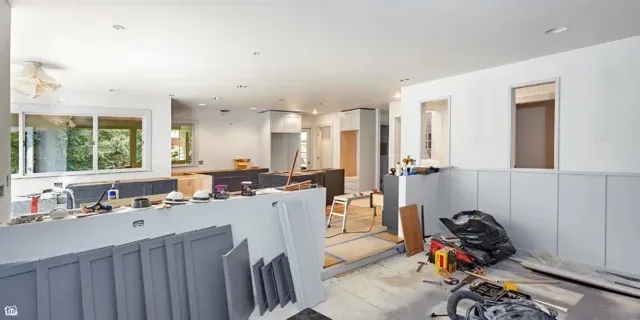
A whole-home project large enough to move interior walls goes through the city's full submittal list — a scaled floor plan naming every room, plus the location and dimensions of any new beams, headers, and posts, which the plan reviewer can require a structural engineer to certify. Inspections run in a fixed order: electrical rough-in with the State inspector first, then a combined framing, insulation, mechanical, and plumbing rough-in, then electrical final, then building, mechanical, and plumbing finals. Adding a bedroom to a home on a septic system means budgeting time for an MPCA-licensed compliance inspection before the permit closes out.
Building conditions in Inver Grove Heights
Inver Grove Heights sits directly above the Pine Bend Impact — a meteor strike the Minnesota Geological Survey identified in 2021, roughly 490 million years old and about 2.5 miles across, its crater buried under some 350 feet of rock and soil near the Mississippi River bluffs. Those bluffs mean shallower, more irregular bedrock along the city's eastern edge than the flatter former farmland to the west. A meaningful share of the city, Rich Valley especially, is still unsewered — homes run on individual septic systems, which the city's own permit process accounts for directly when a project adds a bedroom.