Child-friendly design comes down to a handful of practical choices, not a compromise between safety and style: durable materials that shrug off daily wear, furniture without hard edges, and storage that actually gets used. Done well, none of it reads as "kid-proofed" — it just reads as a well-designed home that happens to hold up to a family living in it.
The stakes are real enough to plan around deliberately. According to the American Psychological Association, a cluttered, disorganized space can add to stress and make it harder to focus and relax — for parents and kids alike. A home designed around how a family actually lives, rather than retrofitted room by room after the fact, avoids that problem instead of managing it.
- Choose Durability: Materials That Last
- Furniture Without Sharp Corners
- Storage That Keeps Up With Kids
- Multi-Function Spaces
- Elegant, Not Juvenile: Kid-Friendly Décor
- Safety Details Worth Building In
Choose durability: materials that last
Durability matters more in a family home than almost anywhere else. Kids are rough on furniture, flooring, and walls, and choosing long-lasting materials up front avoids a cycle of constant repairs and replacements.
Luxury vinyl plank (LVP) flooring is close to the default answer for high-traffic family spaces — waterproof, scratch-resistant, and easy to clean, which makes it a strong fit for playrooms, mudrooms, and kitchens alike. Performance fabrics on upholstered furniture add the same protection to seating, resisting spills and everyday wear without looking utilitarian. Matte-finish paint hides fingerprints and smudges far better than a satin or semi-gloss sheen, and quartz countertops bring the same non-porous, stain-resistant durability to kitchens and bathrooms.
Washable wall paint and removable, machine-washable slipcovers on furniture make ordinary upkeep dramatically easier — both let you clean up a mess without repainting or replacing anything.
Minnesota adds its own durability test on top of the usual kid-related wear. Half the year, LVP flooring is handling road salt, sand, and slush tracked in on boots, not just spilled juice — a material that only needs to survive spills indoors won't hold up the same way through a full South Metro winter. The same logic applies to entryway surfaces generally: whatever material choice works for a mudroom or back entry needs to handle winter conditions as its baseline case, with kid-related messes as an addition on top rather than the main test.
Furniture without sharp corners
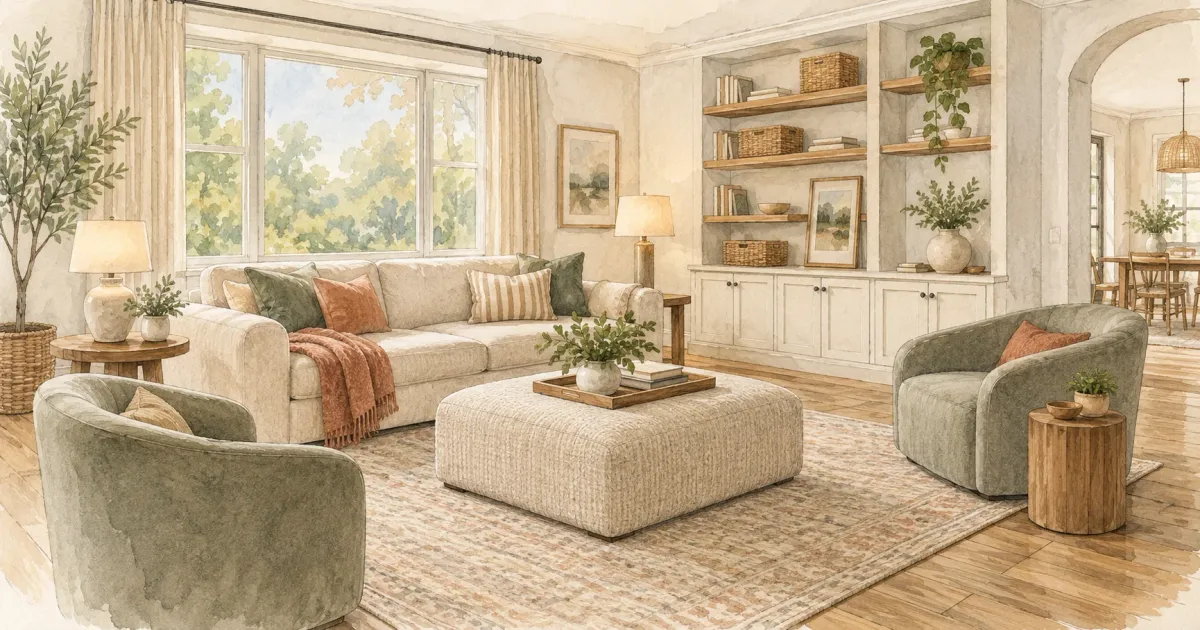
Sharp furniture edges are a real safety risk for small children learning to walk and climb, and rounded, upholstered pieces solve that without reading as a "childproofed" compromise. Rounded coffee tables and upholstered ottomans double as seating and storage while removing the hard corners a traditional coffee table presents. Upholstered chairs and sofas with padded, cushioned arms are a safer choice than hard wooden armrests, and curved-edge barstools work the same way in a kitchen or dining area. For furniture you're keeping rather than replacing, corner protectors on existing sharp-edged pieces close the gap at a fraction of the cost.
Storage that keeps up with kids
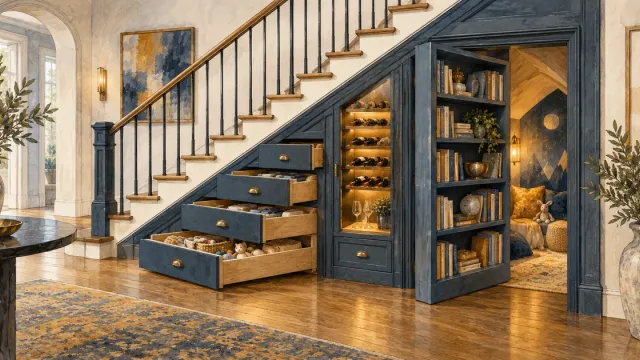
Kids accumulate an outsized amount of stuff relative to the space they actually occupy — toys, books, clothes, and art supplies pile up fast without a deliberate plan for where it all goes. Built-in shelving integrates into a wall cleanly and keeps items accessible without looking like a retrofit, and storage ottomans and benches add hidden capacity to a room that already needed the seating. Clear bins and labeled baskets do double duty: they make it easier for parents to find things, and they teach kids where their own belongings belong, which measurably increases the odds items actually get put away.
If storage is the main frustration in your home, a dedicated mudroom does more for a family's daily routine than almost any other single room change — especially in a Minnesota winter, when snow pants, boots, and wet mittens need somewhere to land before they migrate through the rest of the house.
Multi-function spaces
Not every home has separate playrooms, homework areas, and family rooms, and a well-designed multi-purpose room can serve several of those roles without feeling cluttered or improvised. A living room doubling as a playroom works well with stylish toy storage and a foldable play table that disappears when not in use. A dining room can double as a homework station with built-in storage for school supplies, keeping the table itself free for meals. Defining zones with an area rug, a lighting change, or deliberate furniture placement helps a multi-purpose room read as intentional rather than crowded — and color and lighting choices do real work here too, not just layout.
Elegant, not juvenile: kid-friendly décor
Kid-friendly doesn't have to mean primary colors and cartoon characters. Soft, neutral wall tones paired with playful pops of color in artwork and accessories read as sophisticated while still feeling warm and approachable for a family. Removable wallpaper and decals let a room's look evolve as kids grow, without a repaint each time. Textured rugs and cushions add warmth and a soft landing surface for play, which matters as much practically as it does aesthetically. Functional décor — a chalkboard wall, a section finished in magnetic paint — gives kids a creative outlet built into the room itself rather than competing with the room's design.
Safety details worth building in
Every child-friendly design decision should weigh real risk alongside style, and a handful of details make an outsized difference. Cordless blinds remove a strangulation hazard that corded versions still carry. Slip-resistant rugs reduce trip-and-fall risk in high-traffic rooms. Baby gates and outlet covers matter most at genuinely high-risk points — stairs and kitchens — rather than throughout the whole house.
Furniture tip-overs are a more serious risk than most homeowners realize, and it's a straightforward one to close off. The CPSC's Anchor It! campaign recommends anchoring any furniture with drawers, doors, or shelves to the wall — a federal safety standard for clothing storage units took effect in September 2023 for exactly this reason. Soft-close drawers are a smaller but related detail, preventing pinched fingers on cabinetry kids use daily.
Smart home features extend the same safety thinking without adding visual clutter. Smart door locks and cameras give parents remote monitoring without an obvious security-system look. Motion-sensor night lights help prevent falls on nighttime trips to the bathroom while staying unobtrusive during the day, and temperature-controlled faucets reduce the risk of accidental scalding at the sink or in the tub.
A family home in Prior Lake or anywhere else in the South Metro doesn't have to choose between holding up to kids and looking like a home you're proud of — the materials and details above do both jobs at once when they're planned in from the start rather than patched in after something breaks. Contact us to talk through what a child-friendly redesign would look like for your own home.