
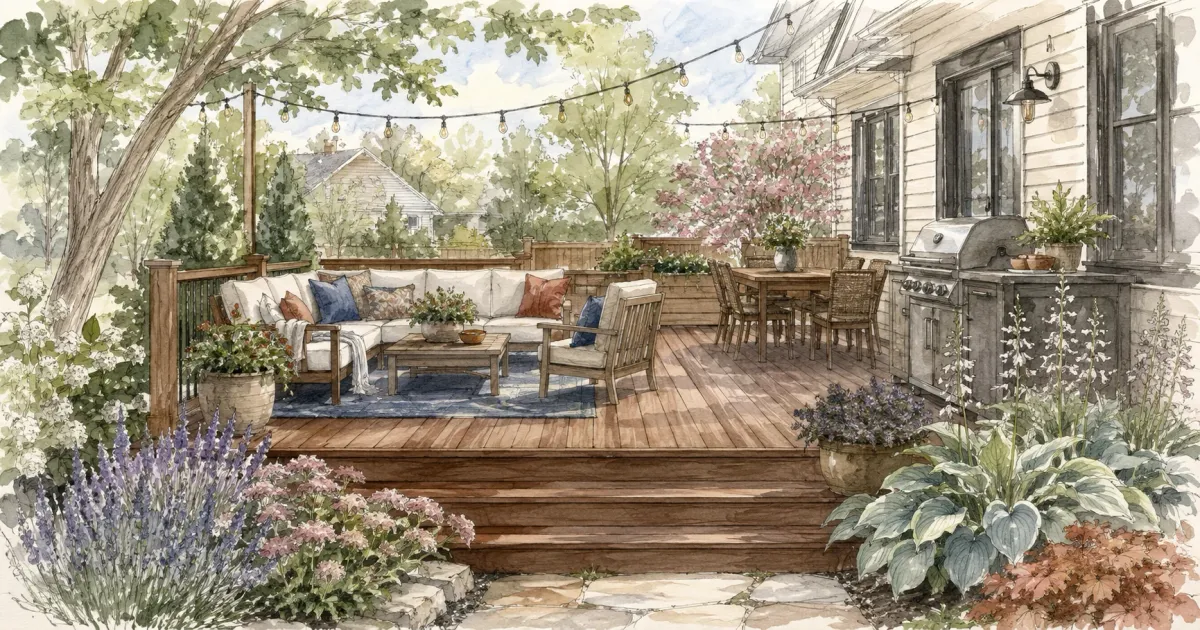
As the snow melts and temperatures begin to rise across Minnesota, many homeowners start thinking about how they'll use their outdoor space in the months ahead. Deck projects quickly move to the top of that list.
What often gets overlooked is how much planning happens before construction ever begins. Most deck projects that start in early summer were actually planned weeks — or even months — earlier. From design decisions to material selection, timing plays a bigger role than many homeowners expect. Based on conversations our team has had over the past year, here are the key things to understand before starting a deck project this spring.
- Why deck projects pick up in spring
- What homeowners underestimate
- What actually drives timeline
- Choosing materials that hold up in Minnesota
- Designing a deck you'll actually use
- Common deck mistakes
- What to do if you're thinking about a deck this year
Why Deck Projects Pick Up in Spring
Spring naturally shifts how homeowners think about their space. After a long winter, there's a renewed focus on spending time outdoors, hosting family and friends, and making the most of warmer evenings. Decks often become the center of that shift — they connect the home to the yard and create a place to gather, relax, and extend living space beyond the interior.
Because of that, many homeowners begin exploring deck projects around the same time each year. The key difference tends to be how early they start the process. Homeowners who begin planning in late winter — before ground thaw and before contractor calendars fill up — are the ones who end up building in early summer rather than waiting until August.
What Homeowners Underestimate About Deck Projects
Decks may seem straightforward, but they often involve more decisions than expected. Two areas tend to catch homeowners off guard.
The Number of Design and Material Options
From decking materials (cedar vs. composite) to railings, lighting, and layout, the range of choices can slow decision-making. These selections directly impact both cost and timeline, and many of them interact with each other — a composite decking choice, for example, often calls for different railing hardware and additional joist spacing than a natural wood build.
The Time It Takes to Finalize Those Decisions
Even with a clear vision, aligning on materials, layout, and features often takes longer than anticipated. This is especially true when homeowners are balancing budget considerations with long-term goals, since a cheaper material up front can mean a costlier maintenance schedule later. Spending time upfront to clarify preferences leads to a smoother process later.
What Actually Drives Timeline (and Delays)
Many homeowners assume construction is the primary driver of timeline. In reality, several factors influence when a project can begin:
- Decision-making speed — Clear, early choices help projects move forward more quickly
- Material selection — Certain materials may have longer lead times
- Weather conditions — Spring ground conditions (wet vs. dry) can impact start dates
- Project clarity — Well-defined scope reduces mid-project changes
Once construction begins, deck projects are often completed more quickly than homeowners expect. In many cases, timelines fall within a two- to six-week range, depending on size and conditions.
Choosing Materials That Hold Up in Minnesota
Material choice affects cost, maintenance, and how the deck performs through Minnesota's freeze-thaw cycles and humid summers. The table below summarizes how the most common decking options compare.
| Material | Cost per sq. ft. | Maintenance | Best for |
|---|---|---|---|
| Pressure-treated wood | $15–$25 | Annual cleaning, periodic staining/sealing | Budget-conscious builds, traditional look |
| Cedar | $20–$30 | Annual cleaning, sealing to prevent graying | Natural appearance, moderate upkeep |
| Composite | $32–$45 | Annual cleaning, no staining required | Low-maintenance, long-term durability |
| PVC/plastic | Up to $48+ | Annual cleaning, no staining required | Maximum moisture resistance, highest upfront cost |
Wood decking costs less upfront but needs more regular upkeep to prevent warping, splintering, and rot. Composite and PVC cost more initially but resist cracking and rot better over time — a real advantage given how many freeze-thaw cycles a Minnesota deck goes through in a typical winter. One tradeoff worth knowing: composite and plastic boards absorb more heat than wood and can get hot enough underfoot in direct sun that lighter colors are worth considering, according to Houzz's comparison of plastic and wood decking.
Foundation systems matter just as much as decking material. Traditional concrete piers can shift as the ground freezes and thaws each winter. Modern systems, like helical piers, are designed to reduce that movement and improve long-term stability. Minnesota's frost depth requirements — which vary by region and are outlined in the state's frost depth guidance — determine how deep footings need to be set, and getting this detail right the first time avoids a deck that heaves or settles unevenly within a few winters.
Designing a Deck You'll Actually Use
One of the most important factors in a successful deck is how naturally it fits into everyday life. Usage tends to increase when a deck is designed with flow and accessibility in mind.
Location relative to the home. Decks connected to kitchens or main living areas tend to see the most use, since they turn into an extension of daily routines rather than a destination that requires a special trip.
Access points. Large sliding or French doors help create a seamless transition between indoor and outdoor spaces, which matters more than homeowners initially expect once the deck is built and in use.
Stairs and yard connection. Skipping stairs may reduce cost, but it can also limit how often the space is used by cutting off easy access to the yard for kids, pets, or entertaining.
Sun and shade. Thinking about when and how the space will be used — morning coffee versus evening dinners — helps guide layout, furniture placement, and whether a pergola or shade sail is worth adding.
A well-designed deck doesn't just look good — it becomes a natural extension of how the home is lived in.
The Most Common Deck Mistakes (and How to Avoid Them)
Most deck regrets come down to planning decisions rather than construction quality.
Choosing a layout that limits flow. Poor connection to the home or yard can reduce day-to-day use, so it's worth designing with movement — from kitchen to grill, from deck to yard — in mind from the start rather than treating the deck as an isolated platform.
Underestimating size needs. Decks that feel adequate on paper can feel cramped in practice, especially once a table, seating, and a grill are all in place at the same time. It's easy to plan for the deck empty and forget how much square footage furniture actually takes up.
Overlooking long-term maintenance. Material choice plays a big role in upkeep over time. Composite materials generally require less maintenance than natural wood, but come with different tradeoffs in cost and heat retention, as outlined above.
Not aligning budget with design goals. Early clarity around cost helps avoid compromises later. Getting these conversations out of the way upfront tends to make the rest of the process significantly smoother, since materials and layout decisions are much harder to unwind once ordered.
Using the wrong foundation system for Minnesota conditions. Traditional concrete piers can shift with freeze-thaw cycles, leading to a deck that feels unstable within a few seasons. Modern systems, like helical piers, are designed to reduce movement and improve long-term stability — an important consideration in our climate.
Addressing these decisions early helps avoid frustration after the project is complete. Many of the same planning principles apply whether you're building new or replacing an aging structure — see our guide on building a deck that withstands all four seasons for more on seasonal durability.
What to Do If You're Thinking About a Deck This Year
If a deck is on your radar this year, the most helpful step is simply getting clear on your priorities. Start with the type of materials you're interested in, a general layout or style you like, and a rough understanding of budget. If you want design inspiration first, our roundup of best deck designs for your home is a good place to start.
From there, early conversations — often starting with a simple phone discussion — can help align expectations before moving into a full on-site assessment. The more clarity you bring into the process, the more efficiently everything tends to move. Our seasonal maintenance and exterior services team can also help you evaluate an existing deck if you're weighing a repair versus a full rebuild.
Ready to Talk Through Your Deck Project?
Deck projects are one of the most rewarding ways to expand how a home is used — but they benefit from thoughtful planning and timing.
Starting the conversation early doesn't mean committing right away. It simply gives you the time to make informed decisions and move forward with confidence.
If you're thinking about a deck this year, reach out to us — we're always happy to talk through what makes sense for your home.
