Deck skirting ideas worth considering go well beyond the traditional white lattice panel most homeowners default to. Skirting closes off the open space under a raised deck, and while lattice is the familiar choice, it is often the weakest option for durability, wildlife control, and finished appearance — the three things skirting is actually supposed to deliver.
For Twin Cities homeowners, that gap matters more than it would in a milder climate. A raised deck's underside takes on snowmelt, standing moisture, and the kind of freeze-thaw cycling that degrades a flimsy lattice panel fast, on top of being exactly the sheltered, dry space local wildlife looks for in the off-season.
- What Deck Skirting Is Actually For
- Five Alternatives to Traditional Lattice
- Keeping Wildlife and Debris Out
- What to Check Before You Choose
- Frequently Asked Questions
What deck skirting is actually for
Deck skirting does two jobs at once: it finishes the look of a raised deck by closing off the open framing underneath, and it protects that space from moisture, debris, and animals that would otherwise treat it as free shelter. A deck without skirting reads as unfinished from the yard, and the exposed underside collects leaves, snow, and standing water against the deck's structural posts and framing — the same components that hold the deck up.
Traditional white vinyl lattice handles the visual half of that job reasonably well but falls short on the rest. Its open pattern lets small animals through easily, and thinner lattice panels can crack or warp under Minnesota's freeze-thaw cycling within a few seasons. That gap is exactly why the alternatives below have gained ground.
Five alternatives to traditional lattice
Each of these options trades off differently between cost, upkeep, and how much airflow it allows underneath the deck — airflow matters because a fully sealed underside can trap moisture against the framing rather than letting it dry out.
| Skirting type | Look | Airflow | Maintenance | Best for |
|---|---|---|---|---|
| Horizontal boards | Modern, clean-lined | Moderate (gapped) | Low-moderate | Contemporary homes, wood or composite decks |
| Vertical boards | Cottage, traditional | Good | Moderate | Older or farmhouse-style homes |
| Metal panels | Industrial, low-profile | Low-moderate | Very low | Homeowners who want minimal upkeep |
| Faux stone | Upscale, substantial | Low | Low | Homes with stone or masonry accents elsewhere |
| Vinyl panels | Traditional, budget-friendly | Moderate-high | Very low | Budget-conscious replacements for old lattice |
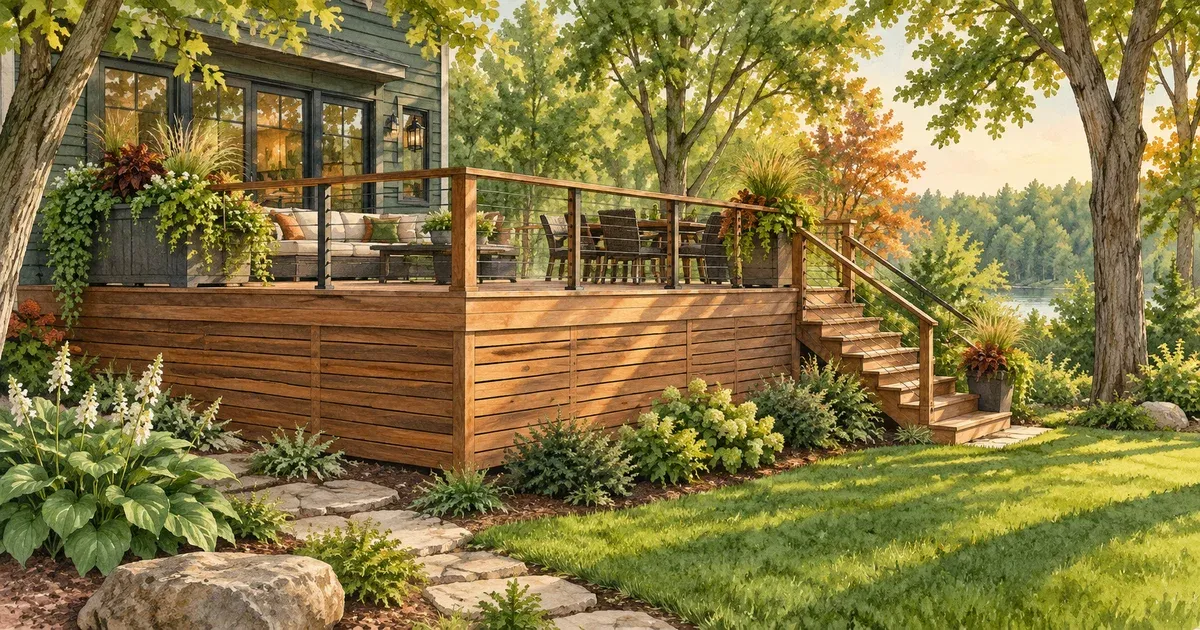
Horizontal skirting boards, run in wood, composite, or PVC, give a deck a more grounded, modern look than a lattice grid does, and the gaps between boards can be sized to control airflow versus visibility. Vertical board skirting reads more traditional or cottage-style and, run properly, allows some of the best airflow of any solid option, since the gaps naturally align with the direction air needs to move.
Metal skirting, typically aluminum or steel, is the lowest-maintenance option on this list and naturally pest-resistant, since there is no organic material for animals to chew through. It reads more industrial than the others, which suits some homes and clashes with others. Faux stone panels give a deck a substantial, upscale look without the cost or structural requirements of real masonry, though they carry a higher material cost than the other options here. Vinyl panels are the direct, budget-friendly upgrade path from old lattice — moisture-resistant, available in wood-grain finishes, and the easiest option to install as a straight swap.
Keeping wildlife and debris out
A raised deck's underside is dry, sheltered, and rarely disturbed — exactly what rabbits, skunks, and other small animals look for going into a Minnesota winter. Skirting with large gaps, damaged panels, or a poor ground seal invites exactly that kind of denning, and once an animal has established itself underneath a deck, removal is a far bigger project than the skirting repair that would have prevented it.
Solid panel skirting with small ventilation cutouts, rather than an open lattice pattern, blocks wildlife access while still letting the space underneath breathe. A buried hardware-cloth barrier a few inches into the ground along the skirting's base stops animals from digging underneath it, which surface-level skirting alone won't prevent.
Debris control matters for the same reason moisture control does. Leaves and yard debris that blow underneath a deck and stay wet against the framing accelerate rot in exactly the structural members a deck depends on. Skirting that closes off that space, rather than just visually screening it, is doing real protective work, not just a cosmetic finish — the kind of upgrade the JLC Cost vs. Value report consistently shows pays off by preventing larger repairs later, not just by improving how a deck looks.
What to check before you choose
Minnesota's state building code covers deck construction generally, but it does not dictate a specific skirting material — the requirement is that whatever you install meets basic durability and safety standards, not that you use one product over another. That leaves the material choice largely up to fit and preference, but a few practical checks still matter before you commit.
Confirm your deck already has adequate ventilation built into the framing before choosing a low-airflow option like faux stone or fully sealed panels — a deck with a walkout basement below it, common on many Prior Lake properties with sloped, wooded lots, often needs more airflow underneath than a flat-lot deck does, simply because there is more enclosed volume trapping moisture. If you are already planning other work on the deck itself, it's worth coordinating skirting into that same project rather than treating it separately — our deck and exterior guide to building a deck that holds up through all four seasons covers the structural side that skirting sits on top of.
Frequently asked questions
Do I need deck skirting, or is it just cosmetic?
Skirting does real protective work beyond appearance — it keeps debris and standing moisture off the deck's structural framing and blocks wildlife from denning underneath. A deck without it is more exposed to rot and pest issues over time, even if the framing itself is sound.
What is the most durable deck skirting material?
Metal panels and faux stone tend to hold up the longest with the least maintenance, since neither is organic material that can rot or attract pests. Vinyl is a close second for durability at a lower cost, though it is more of a direct lattice replacement than a premium upgrade.
Does deck skirting need ventilation gaps?
Yes, in most cases. Fully sealing the space under a deck can trap moisture against the framing rather than letting it dry out, so most skirting options — even solid panel styles — should include some ventilation cutouts or gaps unless the deck's framing was specifically designed for a sealed underside.
Can I install deck skirting myself?
Vinyl and horizontal or vertical board skirting are reasonable DIY projects for someone comfortable with basic exterior carpentry. Metal panel systems and faux stone installations typically involve more specialized fastening and are usually worth having installed professionally.
Skirting is one of the easiest upgrades to overlook on a deck project, but it protects the structure underneath as much as it finishes the look above. If your current lattice is cracked, sagging, or already showing signs animals have gotten underneath, contact us to talk through which of these alternatives fits your deck and your home.