
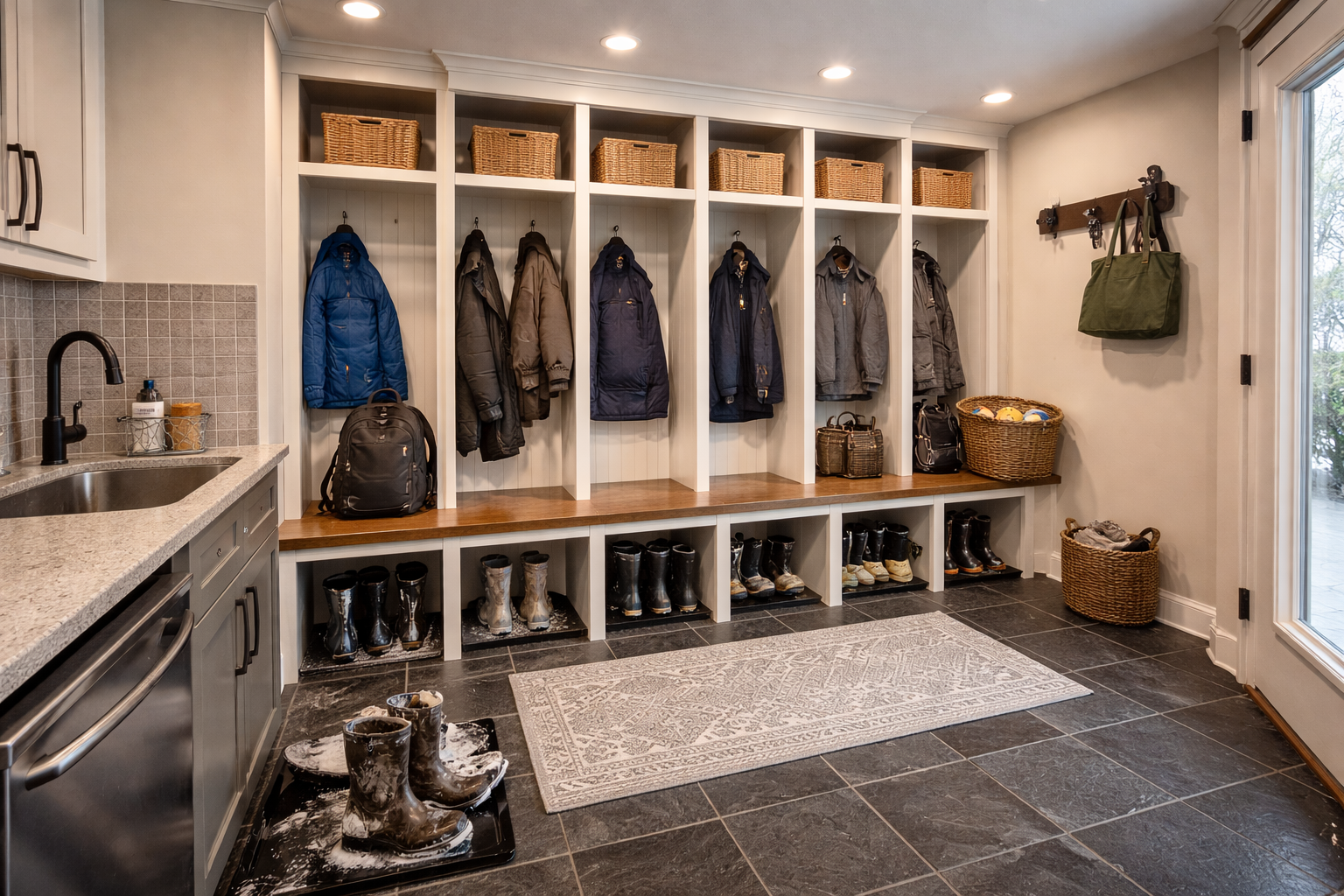
Minnesota Winters Start at the Front Door

Every Minnesota homeowner knows the routine. You step inside after a long winter day, boots caked with road salt, coats dripping with melting snow, and gloves stuffed into pockets. Within minutes, slush spreads across the floor, salt dries into white stains, and moisture creeps toward hardwood and trim. Without a proper buffer, winter weather quickly takes over the entryway—and the rest of the house follows.
This is where a thoughtfully designed mudroom earns its keep. More than a place to kick off boots, a modern mudroom acts as a high-performance transition zone that protects your home from the worst of Minnesota’s climate. When designed correctly, it stops salt and moisture before they damage flooring, keeps clutter contained, and restores order to what is often the most chaotic space in the house.
A modern mudroom doesn’t have to look utilitarian or dated. With the right materials, zoning strategy, and layout, it can feel clean, intentional, and even refined—while quietly doing the hardest job in the home. Designing for Minnesota salt and slush isn’t about overbuilding; it’s about understanding how moisture behaves and giving it nowhere to go except out.
The Science of Durability: Salt, Moisture, and “Wet Zones”
Road salt is one of the most destructive substances regularly brought into a home. As snow melts, salt dissolves into water, creating a briny solution that penetrates porous surfaces. Once it dries, it leaves behind residue that continues to attract moisture, accelerating wear and causing long-term damage.
Hardwood floors, grout lines, and low-quality finishes are especially vulnerable. Repeated exposure can lead to discoloration, warping, and surface breakdown. This is why preventing water damage on wood floors starts not with cleaning—but with containment.
A modern mudroom should be designed around zones:
- Wet Zones handle snow, salt, and moisture directly. These areas need non-porous materials that can tolerate repeated exposure.
- Dry Zones store clothing and gear once it’s shed and dried, keeping moisture from spreading deeper into the home.
Using this approach allows homeowners to control mess at the point of entry rather than constantly chasing it throughout the house. Non-porous materials such as porcelain tile, sealed concrete, metal, and moisture-resistant cabinetry are essential in wet zones, while ventilation and spacing help move items from wet to dry efficiently.
Understanding this science allows mudroom design to feel intentional instead of reactive—and sets the stage for solutions that actually work.
Heated Tile Floors: The Foundation of a High-Performance Mudroom

If there is one feature that defines a Minnesota-ready mudroom, it’s a heated tile floor. Radiant heat transforms tile from a cold, hard surface into an active drying system that works silently all winter long.
When boots come in covered in snow and slush, heat beneath the floor speeds evaporation, reducing standing water and preventing salt from lingering. This minimizes staining, limits moisture migration, and makes cleanup faster and easier.
Porcelain or ceramic tile is ideal because it is non-porous, durable, and easy to maintain. Large-format tiles with minimal grout lines further reduce places where salt and moisture can collect.
Functional Benefits
- Accelerates drying of snow and slush
- Reduces salt residue and staining
- Improves comfort underfoot
- Protects adjacent wood flooring
Best For
- Active families with kids and pets
- Homes with attached garages
- Entryways used multiple times per day
Heated tile floors don’t just handle winter better—they also elevate the everyday experience of the space.
Custom Lockers with Integrated Ventilation
Winter outerwear is bulky, wet, and slow to dry. Tossing damp coats onto hooks or piling snow pants on the floor invites mildew and lingering odors. Modern mudrooms solve this problem with custom lockers designed for airflow.
Built-in lockers keep gear contained and organized, while open backs, vented panels, or hidden airflow paths allow moisture to escape. Some designs integrate low-profile vents or connect lockers to adjacent HVAC returns to encourage circulation.
Locker interiors can be tailored to household needs, with dedicated cubbies for hats, gloves, backpacks, and helmets—each with room to breathe.
Functional Benefits
- Speeds drying of winter gear
- Reduces odors and mildew
- Keeps clutter off floors
- Creates personalized storage zones
Best For
- Families with school-aged children
- Households with heavy winter gear
- Homes without secondary coat closets
Ventilated lockers turn chaos into routine and help mudrooms recover quickly after each use.
Raised Shoe Cubbies and Smart Boot Storage
Boots are ground zero for salt and moisture. Left directly on the floor, they trap water underneath and spread residue across finished surfaces. Raised shoe cubbies solve this by lifting footwear off the ground and allowing air to circulate.
Modern designs often include slatted shelves, metal racks, or recessed trays that catch drips while keeping boots upright. Some cubbies incorporate removable mats or drainage channels for easy cleaning.
Spacing matters. Cubbies should be tall enough for winter boots and wide enough to prevent items from touching, which speeds drying and reduces odor.
Functional Benefits
- Keeps wet footwear off finished floors
- Improves airflow and drying
- Contains salt and moisture
- Simplifies daily cleanup
Best For
- Homes with multiple winter boots per person
- Pet-friendly households
- Entryways connected to wood flooring
Smart boot storage is one of the most effective ways to prevent road salt damage from spreading beyond the mudroom.
Utility Sinks for Winter Cleanup
A utility sink may feel like an old-school feature, but in a modern mudroom, it becomes a quiet workhorse. From rinsing salt off boots to washing muddy paws or soaking gloves, having water access in the entryway reduces mess throughout the home.
Modern utility sinks are compact, stylish, and durable, often made from stainless steel or composite materials that resist staining. Pairing them with wall-mounted faucets and backsplash protection keeps the design clean and intentional.
Strategic placement matters. Sinks work best near wet zones and boot storage, minimizing drips across the room.
Functional Benefits
- Allows immediate salt and mud cleanup
- Protects bathrooms and kitchens from mess
- Supports pet care and gear maintenance
- Adds utility without sacrificing aesthetics
Best For
- Pet owners
- Homes with long winters and frequent storms
- Families who spend time outdoors year-round
A utility sink turns the mudroom into a true service space rather than just a drop zone.
Seasonal Organization Checklist for Minnesota Homes
Even the best-designed mudroom benefits from seasonal adjustments. Small habits help preserve finishes and keep the system working smoothly.
Winter Organization Checklist
- Rotate off-season shoes and coats out of lockers
- Keep absorbent mats clean and dry
- Inspect tile grout and seals annually
- Wipe salt residue weekly during peak winter
- Transition gear to dry zones once moisture is gone
These habits protect materials and extend the life of the space—while keeping winter from creeping further into the home.
A Mudroom Built for Real Minnesota Living
A modern mudroom isn’t about aesthetics alone—it’s about control. Control over moisture, salt, clutter, and chaos. When designed intentionally, it becomes a buffer that protects the rest of your home while still feeling calm, clean, and contemporary.
By combining non-porous materials, defined wet and dry zones, heated floors, ventilated storage, smart boot systems, and utility access, Minnesota homeowners can finally stop fighting winter at the front door.
Honey-Doers Remodeling specializes in creating mudrooms that stand up to real-world use without sacrificing design. If your entryway is struggling under the weight of salt and slush, our team can help transform it into a professional-grade transition space built for Minnesota’s harshest seasons.
Winter starts at the door—make sure your home is ready.