The Lingering “Basement Smell” Problem

If you’ve ever walked into your basement and noticed a faint musty smell—especially after a wet spring or humid summer—you’re not alone. That familiar “basement smell” is one of the most common complaints homeowners have, particularly in Minnesota where humidity levels fluctuate dramatically between seasons. Even finished basements can struggle to stay comfortable when moisture isn’t properly managed.
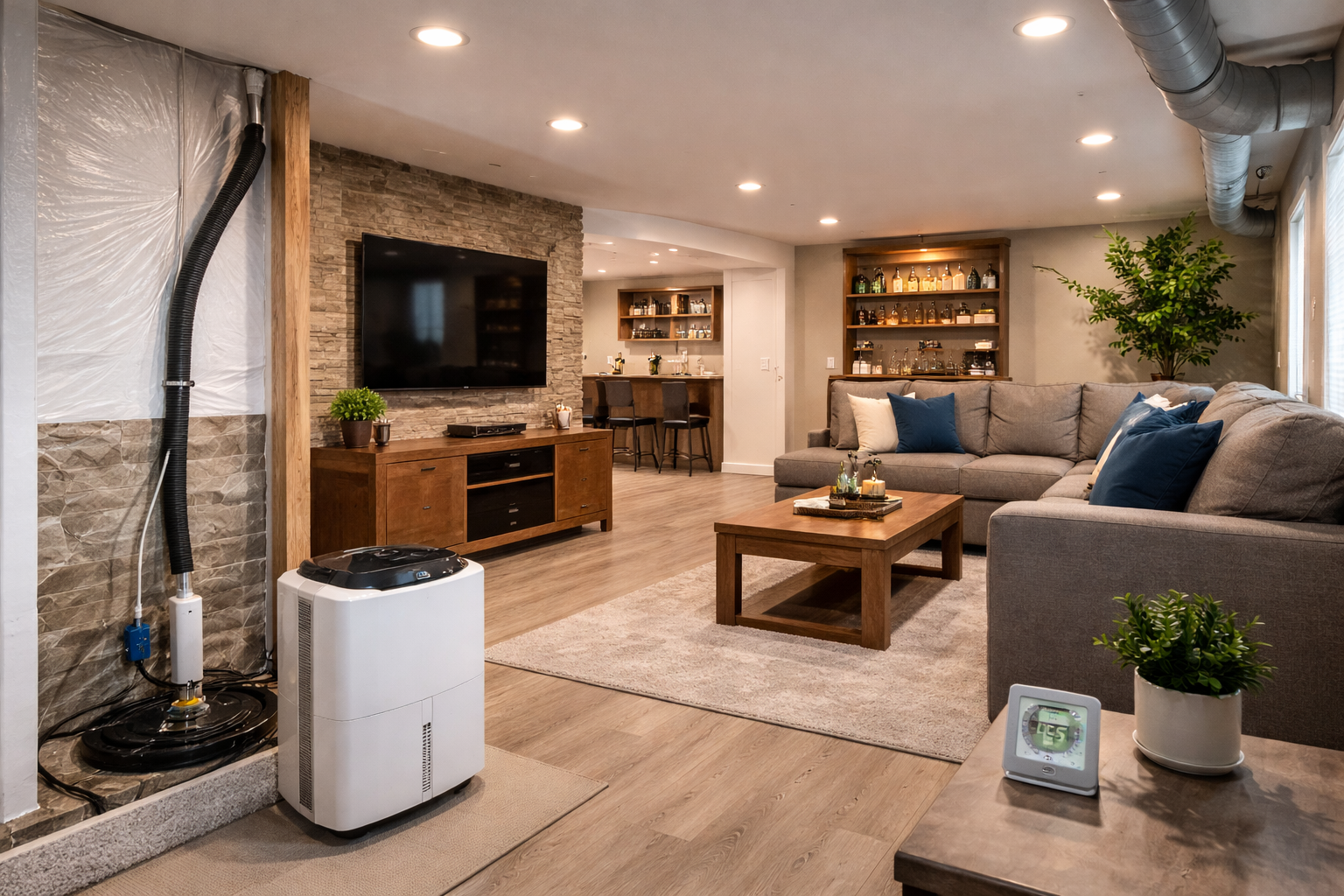
Most homeowners start with a portable dehumidifier. It’s a logical first step and often provides temporary relief. But if you find yourself emptying buckets constantly, fighting persistent odors, or worrying about long-term damage, it’s a sign that the underlying moisture problem hasn’t been solved.
Humidity isn’t just a comfort issue. Excess moisture increases the risk of mold growth, worsens indoor air quality, and can quietly damage framing, flooring, and finishes over time. Managing basement humidity effectively requires more than pulling water out of the air—it requires understanding how moisture gets in and designing the space to control it from the start.
A professionally finished basement should feel just as clean, dry, and inviting as the rest of your home. Achieving that means moving beyond a single appliance and toward a comprehensive basement humidity control strategy.
How Moisture Enters Basements in the First Place
To understand how to reduce basement humidity long-term, it helps to understand how moisture enters the space. Basements are unique because they are surrounded by soil, which naturally holds moisture year-round.
One major pathway is foundation walls. Concrete and masonry are porous materials. Even when there’s no visible water intrusion, moisture vapor can move through the walls via capillary action. This process is slow and invisible, but over time it raises indoor humidity levels.
The floor slab is another contributor. Moisture from the ground beneath your home constantly pushes upward through the concrete. Without proper barriers, that vapor enters the basement air and raises humidity—even during dry weather.
Seasonal changes make the issue worse. In summer, warm humid air enters the cooler basement and condenses on surfaces. In winter, temperature differences and trapped moisture create condensation in walls and framing. This constant cycle explains why relying only on a dehumidifier often feels like fighting a losing battle.
The key takeaway is simple: removing moisture is helpful, but preventing it from entering is far more effective. That’s where smart finishing and remodeling decisions come into play.
Vapor Barriers: The Foundation of Basement Humidity Control
A properly installed vapor barrier is one of the most important—but often overlooked—components of a dry, healthy finished basement. Vapor barriers work by blocking moisture vapor from migrating through foundation walls and slabs into the living space.
When installed during the basement finishing process, vapor barriers create a controlled separation between damp concrete and interior materials. This protects insulation, framing, and finishes from long-term moisture exposure.
How It Adds Value
- Reduces the risk of mold and mildew behind walls
- Protects insulation performance over time
- Extends the life of finished materials
- Improves overall comfort and air quality
Vapor barriers are especially effective when paired with proper insulation systems designed for basements, not standard above-grade walls. This combination helps maintain a stable indoor environment and supports the ideal basement humidity level year-round.
Best Fit For
- Fully finished basements
- Family rooms and guest spaces
- Home offices or workout rooms
Once walls are closed, retrofitting vapor control becomes difficult and expensive. Installing it correctly during finishing is one of the smartest long-term investments a homeowner can make.
Fresh Air Without Moisture: Energy Recovery Ventilators (ERVs)
Basements need fresh air, but bringing in outside air without control can make humidity worse. That’s where energy recovery ventilators (ERVs) come in.
An ERV exchanges stale indoor air with fresh outdoor air while transferring heat and moisture between the two air streams. This means your basement gets fresh air without large swings in temperature or humidity.
Unlike simple exhaust fans, ERVs are designed for continuous, balanced ventilation. They improve air quality while helping regulate moisture levels, making them a powerful tool for how to get rid of humidity in a basement without over-relying on dehumidifiers.
How It Adds Value
- Improves indoor air quality
- Reduces odors and stale air
- Helps stabilize humidity levels
- Enhances overall comfort
ERVs are especially helpful in finished basements that are tightly sealed for energy efficiency. Without ventilation, moisture and pollutants can become trapped.
Best Fit For
- Basements used daily
- Bedrooms or guest suites
- Home gyms or offices
When integrated into a finishing plan, ERVs quietly support long-term basement humidity control without ongoing effort from homeowners.
Flooring Choices That Reduce Humidity Risk

Flooring plays a bigger role in basement humidity than many homeowners realize. Traditional wall-to-wall carpet, while comfortable, can trap moisture and create the perfect environment for mold growth—especially in below-grade spaces.
Moisture-resistant flooring options perform far better in basements. Luxury vinyl plank (LVP), tile, and sealed concrete allow moisture to dissipate rather than absorb.
How It Adds Value
- Resists moisture damage and warping
- Easier to clean and maintain
- Reduces mold risk
- Maintains appearance over time
LVP is especially popular because it offers warmth underfoot, a wide range of styles, and strong moisture resistance. Area rugs can be added for comfort without the risks associated with full carpet installs.
Best Fit For
- Family rooms and play areas
- Home gyms
- Rental or multi-purpose basements
Choosing the right flooring is a key part of reducing basement humidity and protecting your investment.
HVAC Design & Air Circulation Strategies
Even with barriers and ventilation in place, poor air circulation can allow humidity pockets to form. Proper HVAC design ensures that air moves consistently throughout the basement.
One common mistake is inadequate return vents. Without them, conditioned air enters the space but doesn’t circulate effectively, leading to stagnant, humid zones—especially in corners and behind furniture.
Strategic placement of supply and return vents helps balance temperature and humidity. In some cases, zoning systems allow the basement to be conditioned independently from the rest of the home.
How It Adds Value
- Prevents condensation on surfaces
- Improves temperature consistency
- Enhances comfort year-round
- Reduces reliance on portable units
Good airflow also helps materials dry faster if minor moisture events occur, further protecting finishes.
Best Fit For
- Large or open basements
- Multi-room finished layouts
- Basements used year-round
Practical Maintenance Checklist for Year-Round Control
Even the best-designed basement benefits from simple ongoing maintenance. Monitoring conditions helps catch issues early and maintain the ideal basement humidity level.
Seasonal Checklist
- Monitor humidity with a digital hygrometer (aim for 30–50%)
- Inspect sump and drainage systems annually
- Keep HVAC filters clean
- Use dehumidifiers as supplemental support during extreme humidity
- Check for signs of condensation after seasonal changes
These small habits support the larger systems working behind the scenes and help keep your basement comfortable and healthy.
Designing a Basement That Stays Dry by Design
Managing humidity in a finished basement isn’t about fighting moisture after it appears—it’s about designing the space to control it from the beginning. Vapor barriers, ventilation, flooring choices, and HVAC planning all work together to create a basement that feels dry, clean, and inviting in every season.
If you’re planning to finish a basement—or struggling with persistent humidity in one that’s already finished—Honey-Doers Remodeling can help. Our team understands how Minnesota’s climate impacts basements and designs spaces that prioritize comfort, health, and durability.
A dry basement is a better basement. Contact Honey-Doers to explore professional finishing solutions that go beyond the dehumidifier and deliver lasting results.