Smart Kitchen Layouts for Small or Narrow Kitchens
Small kitchens can feel like a daily frustration—but with smart design, they can also become some of the most efficient and enjoyable spaces in the home. According to the National Kitchen & Bath Association, the average U.S. kitchen measures just 161 square feet, meaning millions of homeowners face the same challenge: how to make limited space work harder. The good news is that the right layout, flow, and storage solutions can dramatically transform both functionality and aesthetics, even in narrow galley kitchens or compact city homes.
Whether you’re remodeling a dated kitchen, rearranging an awkward floor plan, or planning a small addition, thoughtful design can create a space that feels bigger, brighter, and easier to use. This guide highlights the most effective kitchen layouts for small and narrow kitchens, along with smart storage strategies and organization ideas that elevate everyday living. By the end, you’ll feel empowered to plan a kitchen that supports your cooking habits, maximizes usable space, and enhances the value of your home.
Why Layout Matters: Flow, Zones, and Storage Strategy
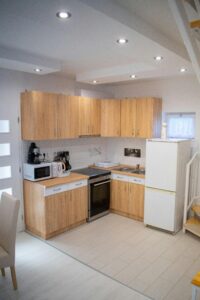
A successful small kitchen begins with efficient flow. Instead of thinking about everything you want in the space, it helps to anchor your decisions in work zones:
- Prep Zone – countertop space near the sink or fridge
- Cooking Zone – stovetop, ovens, pots, and utensils
- Cleaning Zone – sink, dishwasher, waste and recycling
- Storage Zone – pantry items, dry goods, cookware
Having clear zones prevents crowding, minimizes steps, and makes the kitchen feel calmer—even without adding square footage.
Small kitchens also benefit from intentional storage planning:
- Use vertical space up to the ceiling
- Add interior organization (pull-outs, dividers, tiered racks)
- Reduce door swing by choosing sliding or pocket door solutions
- Incorporate multifunction surfaces like cutting boards that slide over the sink
When layout and storage strategy work together, even a 6-foot-wide kitchen can feel surprisingly spacious.
Single-Wall Kitchen Layout: Simple, Efficient, and Space-Saving
A single-wall kitchen (also called a “pullman kitchen”) runs all elements—the sink, stove, fridge, and cabinets—along one wall. It’s ideal for small condos, studios, or narrow homes where floor space is limited.
Why It Works Well
A single-wall layout is extremely efficient because it eliminates wasted walkway space. The open floor area can support a dining table, peninsula, or freestanding island for additional prep space.
Smart Enhancements
- Tall cabinets give pantry storage from floor to ceiling.
- Open shelving keeps essentials accessible and prevents the wall from feeling heavy.
- Appliance garages hide toasters and coffee makers to reduce clutter.
- Slim appliances, such as 24-inch dishwashers or counter-depth refrigerators, maximize circulation.
Ideal For:
Small apartments, narrow homes, accessory dwelling units (ADUs), and homeowners who prefer minimalism.
Galley Kitchen Layout: Maximum Function in Minimal Space
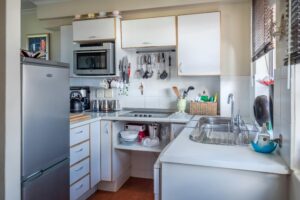
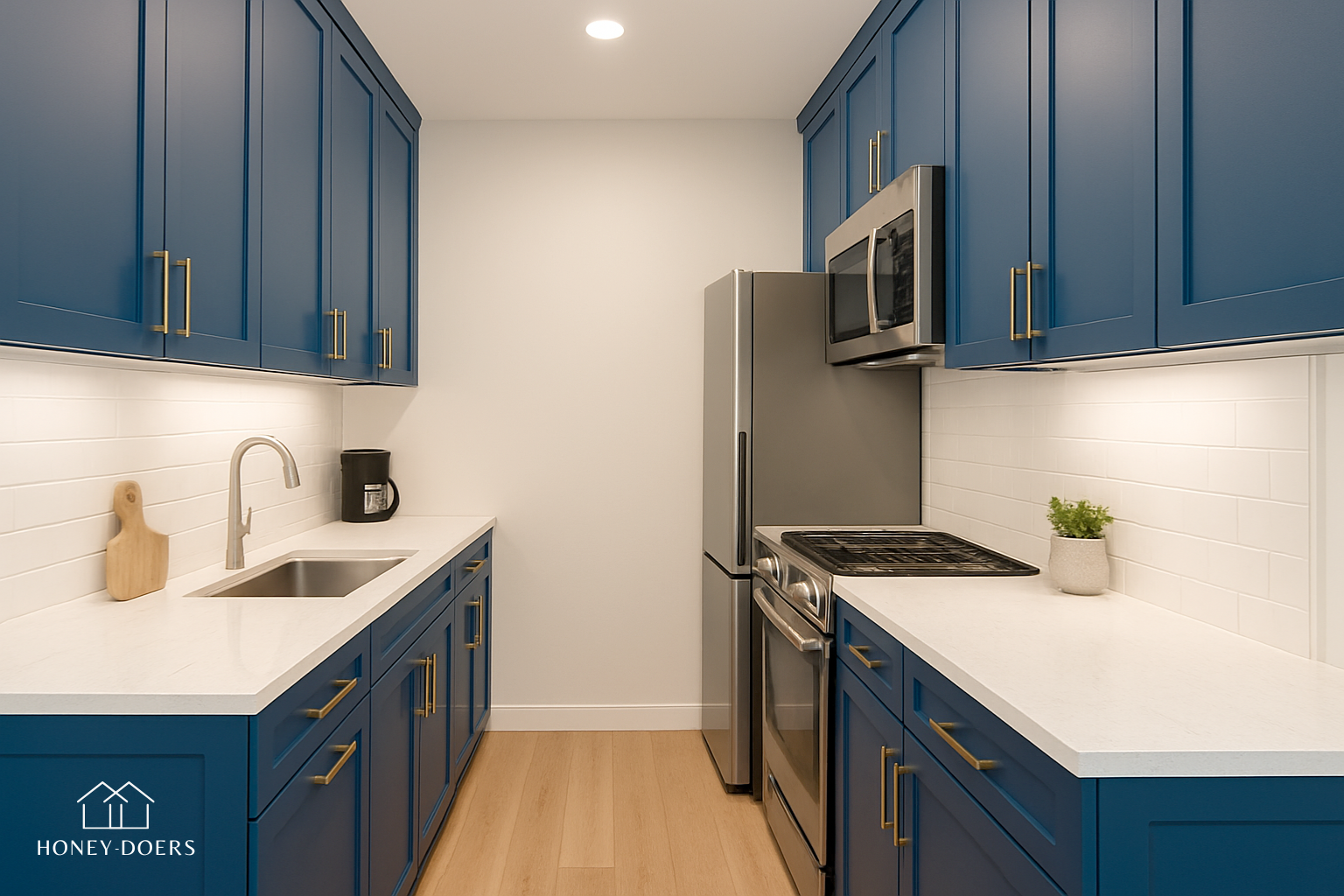
A galley kitchen features two parallel counters, creating a natural corridor for cooking. It is one of the most efficient layouts ever designed—originally developed for ships and professional kitchens.
Why It Works Well
The proximity between counters creates an easy workflow and minimizes walking distance. Even without additional square footage, a galley kitchen can support serious cooking.
Smart Enhancements
- Keep at least 36 inches between counters for comfort.
- Use drawer-style storage instead of deep cabinets to avoid bending or losing items.
- Install task lighting under cabinets to brighten prep areas.
- Add a pocket door at one end for privacy without door swing issues.
Special Small-Space Tip
If one wall is non-structural, consider opening the top half into the living room to create a pass-through window, making the kitchen feel bigger while maintaining storage below.
Ideal For:
Townhomes, older Minnesota homes, and any home with narrow interiors.
L-Shaped Kitchen Layout: Open Feel and Flexible Design
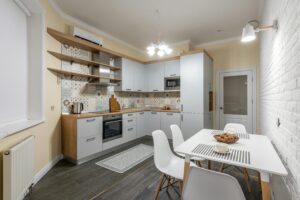
An L-shaped kitchen occupies two adjacent walls, opening the rest of the room for dining or additional cabinetry.
Why It Works Well
It provides excellent flow and easily accommodates multiple cooks, even in small spaces. The open side can support:
- A peninsula
- A breakfast nook
- A mobile island
- Additional tall pantry storage
Smart Enhancements
- Place the sink beneath a window or open wall to enhance natural light.
- Use the corner for lazy susans or blind-corner pull-outs.
- Install floating shelves on the shorter wall to visually lighten the layout.
Ideal For:
Open-concept living, smaller homes seeking more flexibility, and kitchens adjacent to dining rooms.
Compact U-Shaped Kitchen Layout: High Efficiency in Tight Footprints
A U-shaped layout wraps cabinetry and appliances around three walls. In larger kitchens this can feel enclosed, but in small kitchens, it provides unmatched storage and prep space.
Why It Works Well
U-shaped kitchens minimize walking distance between zones and maximize both counter and cabinet space.
Smart Enhancements
- Keep one side open (no upper cabinets) to maintain an airy feel.
- Use slim-profile hardware to avoid bumping into handles.
- Integrate pull-out corner storage to avoid wasted space.
- Consider sliding barn doors if the kitchen sits in a tight hallway.
Ideal For:
Smaller enclosed kitchens, basements, and remodels where storage is a priority.
Smart Strategies for Any Small Kitchen Layout
Regardless of the layout, smart features make a small kitchen feel significantly larger.
1. Use Vertical Space Wisely
Install cabinets to the ceiling or use stacked cabinets. Add shelves above windows or doorways for rarely used items.
2. Pocket and Sliding Doors
Pocket doors save square footage and improve flow, especially in galley and U-shaped kitchens.
3. Multi-Functional Surfaces
- Slide-out cutting boards
- Drop-down counters
- Islands on wheels
- Over-the-sink prep boards
These extend the workspace without a permanent footprint.
4. Thoughtful Lighting
Small kitchens rely heavily on layered lighting:
- Under-cabinet task lighting
- Warm LED lights for ambiance
- Reflective backsplash tile to brighten space
5. Decluttered, Curated Aesthetics
Minimal hardware, light colors, and cohesive materials create the illusion of a bigger kitchen.
Quick-Win Planning Checklist
Measure:
- Doorways, ceiling height, appliance clearances, and walking paths.
Prioritize:
- What do you do most—cook, bake, entertain?
- How many people use the kitchen at once?
Assess Storage:
- Identify areas for vertical or corner organization.
- Consider built-in vs. standalone storage.
Plan Updates:
- Start with flow and layout changes.
- Add cabinetry, lighting, and surfaces second.
- Choose appliances last.
Conclusion: Small Kitchens Can Be Beautiful and Efficient
A small kitchen doesn’t have to limit your lifestyle. With the right layout, smart storage, and thoughtful design, even narrow or compact kitchens can feel spacious, welcoming, and highly functional. Whether you’re updating a single-wall space or reimagining a galley layout, Honey-Doers can help you design a kitchen that fits your home, your daily routines, and your long-term goals.
Contact Honey-Doers Remodeling to plan a small kitchen that works beautifully for your lifestyle.