Creating a beautiful room isn’t only about picking paint colors or buying the right furniture. At the heart of every well-composed space is a focal point—a visually dominant feature that anchors the room, establishes its sense of purpose, and naturally guides how the rest of the design comes together. When chosen intentionally, a focal point makes a room feel organized, harmonious, and easier to enjoy. When chosen accidentally, it can quietly take over the space in ways you never intended.
A focal point is simply the part of the room your eyes land on first. Too often, homeowners default to the television—even when they don’t want their living room centered around passive entertainment. By selecting and emphasizing a focal point with intention, you can create a room that expresses your values, supports your lifestyle, and feels good to be in every day.
This guide will walk you through how to choose the right focal point, how to highlight it using design strategies like color and lighting, and how to avoid common mistakes that weaken the room’s composition. The goal is simple: help you design a space that is both beautiful and meaningful.
1. Why Focal Points Matter in Interior Design
A focal point is more than a pretty feature—it’s the anchor that shapes the entire room’s visual hierarchy. Without one, a space can feel scattered or purposeless, even when it’s full of great furniture or décor. With a strong focal point, your eyes know exactly where to land, and everything else feels ordered and intentional.
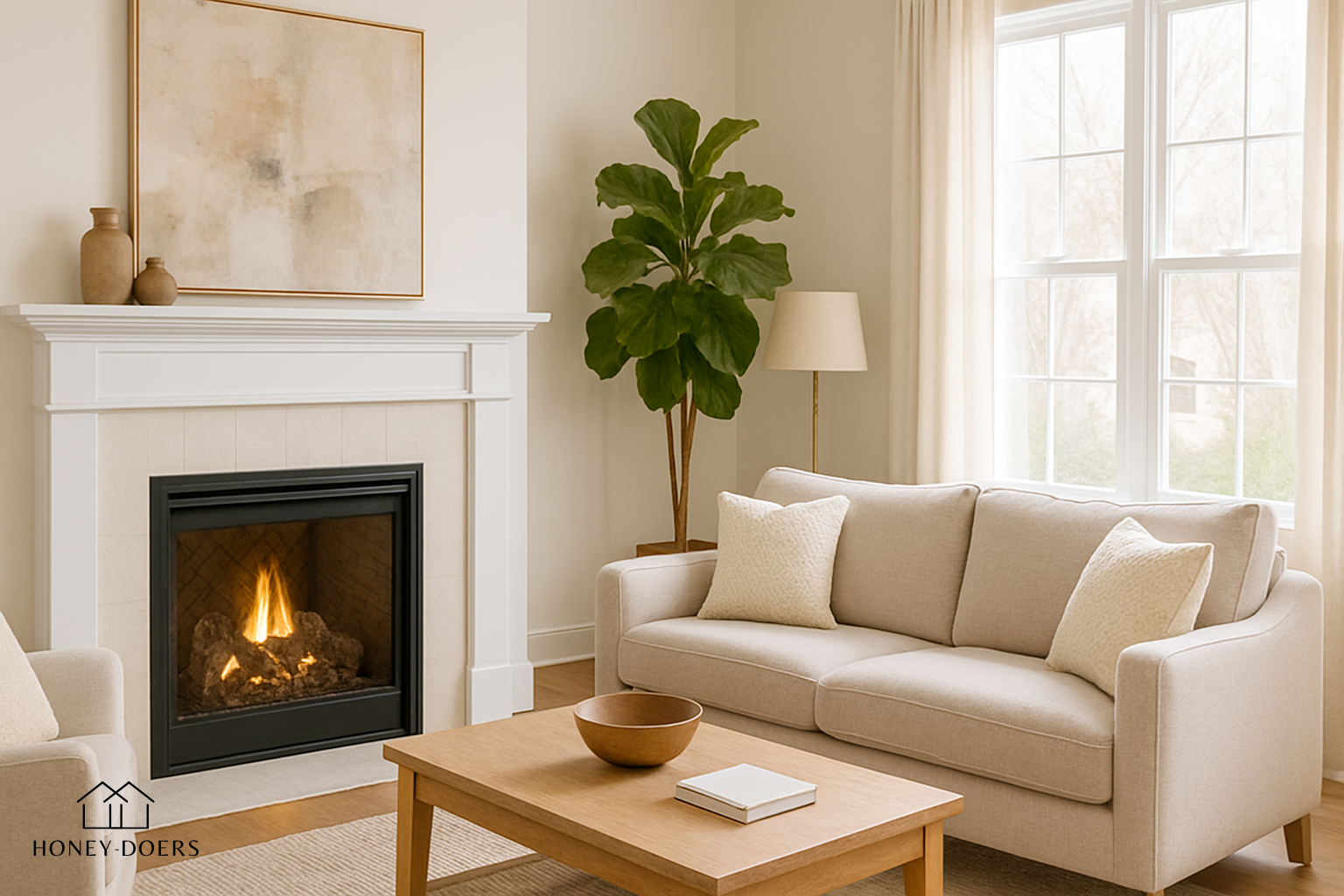
A fireplace, a feature wall, a stunning piece of art, a picture window, or even an architectural element like an archway can all serve this purpose. The key is choosing something that reflects how you want to use the room. If you want conversation and connection, a fireplace or large artwork may be a better choice than a TV. If you want reading and relaxation, a window bench or statement bookshelf may shape the right mood.
When your focal point aligns with the behaviors you want to encourage, the room supports your lifestyle instead of competing with it. This kind of mindful design transforms everyday spaces into environments that feel good—not just look good.
2. Choosing the Right Focal Point for Your Space
The right focal point depends on your room’s layout, natural features, and how you plan to use it. Start by asking a few key questions:
What is the natural strength of the room?
Does it have high ceilings? A beautiful window? A charming fireplace? A dramatic vaulted wall? Leaning into what your home already does well is usually the easiest path to a great focal point.
What activities happen in this room?
This matters more than most homeowners realize. If you want a calm, screen-free environment, don’t center the room around a TV. If you want cozy evenings, a fireplace or textured accent wall might be ideal. If the room is multifunctional, choose a focal point with flexibility—such as a central dining table or a striking light fixture.
What emotion do you want the room to evoke?
Art creates inspiration. Fireplaces create calm. Windows encourage openness. Bookshelves create warmth. A focal point should reinforce the feeling you want people to have in the space.
Examples of great focal points:
- A modern linear fireplace in a Minnesota family room
- A dramatic gallery wall above a sofa
- A bold accent paint color behind a bed
- A sculptural light fixture in a dining room
- A floor-to-ceiling bookshelf in a reading nook
Once selected, everything else in the room—from furniture placement to lighting—flows from this anchor.
3. Use Contrast, Color, and Texture to Highlight Your Focal Point
Once you’ve chosen a focal point, you need to guide the eye toward it. Color, contrast, and texture are three of the most effective tools to achieve this.
Contrast
Contrast doesn’t have to be dramatic; it simply means the focal point stands out from its surroundings.
Examples:
- A dark charcoal fireplace wall in an otherwise light room
- A light oak bookshelf against a deep green backdrop
- A colorful piece of art on a neutral wall
Even subtle contrast helps your focal point feel intentional.
Color
Color communicates emotion instantly. You can use it to draw attention, reinforce style, or create warmth.
Examples:
- A warm terracotta accent wall that grounds a living room
- Deep navy behind a headboard for a rich, intimate feel
- Earthy greens for a natural, calming environment
Texture
Texture adds dimension, especially in cozy Minnesota homes where warmth matters.
Examples:
- Tumbled stone around a fireplace
- Shiplap or millwork behind a sofa
- Chunky woven textiles in a reading nook
Texture visually enriches the focal point without overwhelming the room.
4. Lighting Techniques to Boost Your Room’s Focal Point
Lighting is one of the most overlooked design tools for emphasizing a focal point. The right lighting makes your anchor feature glow—literally and visually.
Accent Lighting
These subtle lights highlight features without dominating the room.
Use them for:
- Art pieces
- Built-in shelving
- Decorative millwork
- Fireplace mantels
Overhead Fixtures
A bold chandelier or pendant can be the focal point or support it by creating visual weight above it.
Natural Light
If your focal point is near a window, consider:
- Soft sheers to diffuse light
- Window treatments that frame—but don’t hide—the feature
- Minimal furniture blocking the light source
Layered Lighting
Combine ambient, task, and accent lighting to ensure your focal point looks great at every time of day.
Lighting shapes mood. If you want your focal point to invite conversation, calm, creativity, or connection, lighting is the silent partner that helps make that happen.
5. Furniture Placement That Supports Your Focal Point
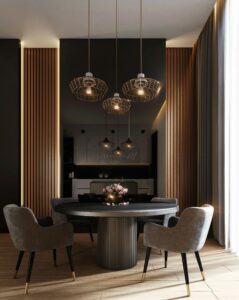
Think of furniture placement as choreography. Every piece should work together to direct your eye—and your movement—toward the anchor of the room.
Anchor the Space With Symmetry
Symmetry naturally feels balanced and draws attention inward.
Example:
- Two identical chairs facing a fireplace
- Matching lamps on either side of a bed’s statement headboard
Use Furniture to Frame the Focal Point
A sofa facing the anchor wall, a dining table centered under a pendant, or chairs angled toward a picture window all enhance the feature’s importance.
Ensure Clear Lines of Sight
Avoid placing tall furniture directly in the visual path to your focal point. Low-profile sofas or open-legged chairs help keep sightlines open.
Avoid Competing Focal Points
Two strong anchors (like a fireplace and a large TV) can force the room to fight itself.
If both must stay:
- Mount the TV above the fireplace
- Create a hidden TV cabinet
- Choose one focal point for everyday use and one for special occasions
Mindful furniture placement ensures your design feels purposeful instead of chaotic.
6. Common Mistakes to Avoid When Designing With a Focal Point
Homeowners often unintentionally weaken their spaces by:
- Choosing an unintentional focal point, usually the TV
- Adding too many bold features, creating visual competition
- Using overly large furniture, which crowds the focal wall
- Ignoring lighting, causing the focal point to fall flat
- Skipping the emotional connection, choosing a feature that doesn’t match how they want to use the room
The goal is not to overwhelm the room but to ground it. A strong focal point should feel welcoming and intuitive—not forced.
7. Final Thoughts: Choose a Focal Point That Encourages the Life You Want
At its core, a focal point is not just a design feature—it’s a tool that shapes how you live in a room. If you want more conversation, choose a fireplace or a piece of art. If you want more creativity, choose a bold desk space or bookshelf. If you want more quiet moments, a window seat might be the right anchor.
The key is to pick a feature that reflects the emotional “tone” you want for the space. When your focal point supports the behaviors you enjoy, the entire room becomes more functional, more calming, and more aligned with your lifestyle.
Honey-Doers can help you design rooms that feel intentional, balanced, and beautifully composed—spaces that are not only stylish, but truly you.