
From Temporary Setup to Permanent Workspace
What started as a temporary solution—a laptop on the kitchen table or a desk squeezed into a spare corner—has become a long-term reality for millions of professionals. Today, nearly 70% of workers spend at least part of their week working from home, and for many, remote work is now permanent. Yet most homes were never designed to support eight-hour workdays, daily video calls, and the mental demands of professional focus.
A poorly designed remote work office space does more than look cluttered. It contributes to physical strain, burnout, and the constant feeling that work never truly ends. When your workspace bleeds into your living space, it becomes harder to disconnect, recharge, and enjoy your home.
That’s where remodeling comes in. Thoughtful work from home office ideas go beyond desks and chairs. They involve sound control, lighting, storage, electrical planning, and intentional separation between “work mode” and “home mode.” When done well, a dedicated home office doesn’t just improve productivity—it enhances comfort, supports long-term health, and adds real value to your home.
For permanent remote workers in Minnesota, where winters are long and indoor environments matter more than ever, investing in a professional-grade remote work office set-up is no longer a luxury. It’s a smart, future-proof decision.
Designing for the Work-Life Boundary
One of the biggest challenges remote workers face isn’t technology—it’s boundaries. Without physical separation, work can quietly expand into evenings, weekends, and family time. Good home office remodeling starts by restoring that boundary.
Soundproofing plays a key role. Noise from the rest of the house—or your work spilling outward—creates constant cognitive distraction. Insulated walls, solid-core doors, acoustic panels, and even upgraded drywall assemblies help contain sound and create a sense of privacy that signals “this space is for work.”
Zone-based lighting reinforces that separation visually and psychologically. Task lighting at the desk, ambient lighting for meetings, and softer perimeter lighting all cue your brain differently. When the office lights turn off at the end of the day, the workday ends with them.
Equally important is location. A remote work office space should feel intentional, not improvised. When work has a defined home, it becomes easier to protect the rest of your house as a place to relax, connect, and recharge.
Custom Built-In Workstations
A custom built-in workstation is one of the most effective ways to transform remote work from “temporary” to truly permanent.
Why It Works
- Designed specifically for your body, workflow, and equipment
- Eliminates clutter through integrated storage and cable management
- Creates a professional, finished look that elevates the entire room
Ideal For
- Full-time remote professionals
- Dual-monitor users
- Anyone spending 6–10 hours a day at their desk
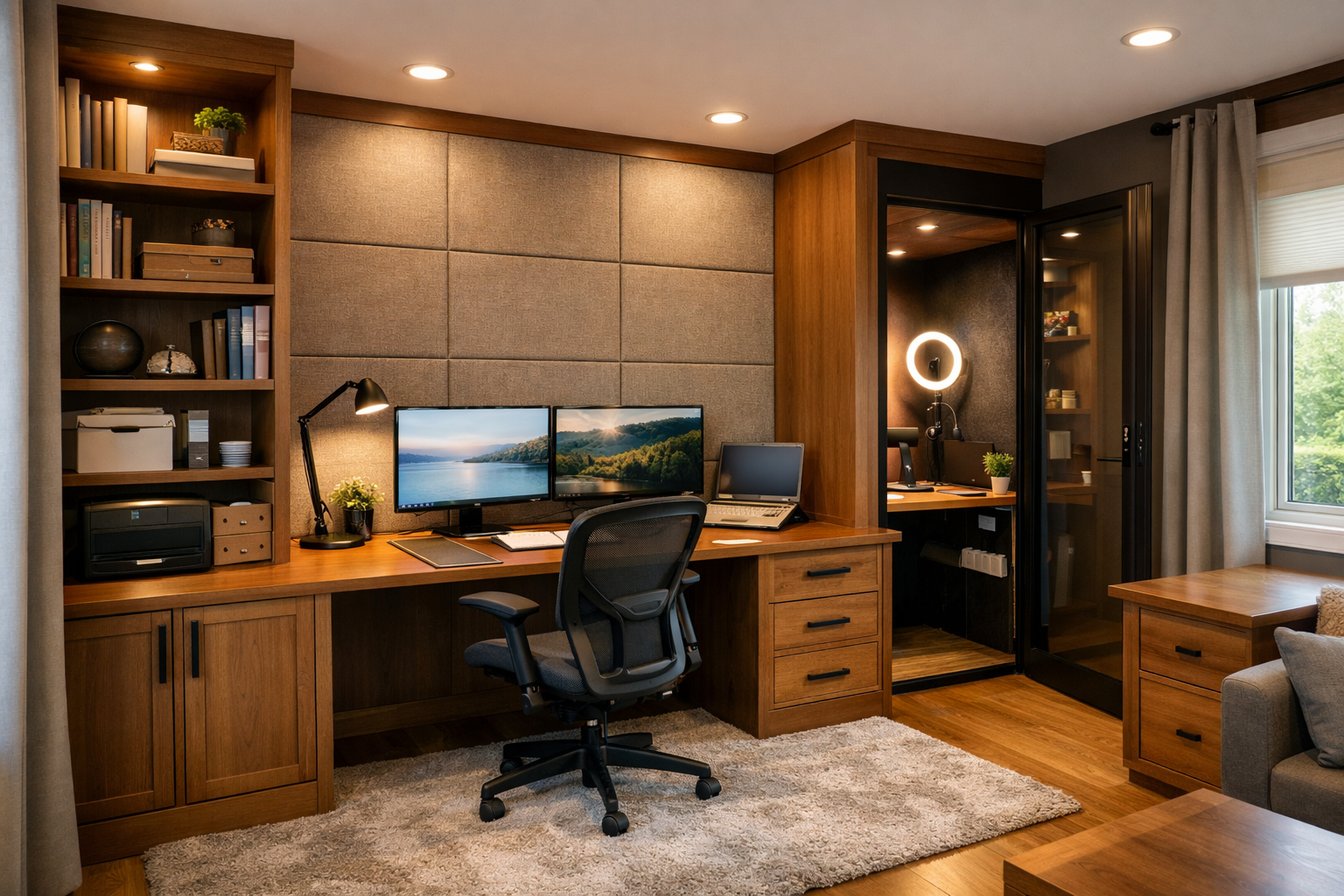
Unlike freestanding desks, built-ins allow precise control over desk height, monitor placement, and storage. Cabinets can be designed around printers, servers, or reference materials, while drawers eliminate the visual noise that leads to distraction. Integrated power outlets and USB ports prevent cords from taking over the space.
From an ergonomic standpoint, custom workstations reduce strain by aligning seating, screens, and work surfaces correctly. Over time, this lowers the risk of neck, shoulder, and wrist issues that are common in makeshift setups.
From a design perspective, built-ins help your office feel like part of the home—not an afterthought. When matched to your home’s trim, flooring, or cabinetry, they blend seamlessly while still feeling purpose-built.
Sound-Dampened “Zoom Rooms”
For many remote workers, meetings are the most stressful part of working from home. Background noise, poor acoustics, and visual distractions all undermine professionalism and confidence.
A sound-dampened “Zoom room” solves this.
Why It Works
- Improves audio clarity and reduces echo
- Creates visual consistency for video calls
- Enhances privacy for sensitive conversations
Ideal For
- Client-facing professionals
- Managers and team leaders
- Anyone on frequent video calls
These spaces don’t have to be large. With proper acoustic treatment—such as sound-absorbing wall panels, insulated doors, and sealed gaps—even compact rooms can perform exceptionally well. HVAC planning is essential to ensure comfort without noisy airflow.
Lighting is just as important as sound. Balanced, front-facing lighting eliminates harsh shadows and eye strain while improving how you appear on camera. Thoughtful background design—neutral colors, built-in shelving, or subtle texture—keeps attention on you rather than your surroundings.
A dedicated Zoom room signals professionalism and reduces daily stress, making meetings smoother and more productive.
Integrated Storage Walls
Clutter is one of the fastest ways to sabotage focus. Integrated storage walls solve this problem by hiding complexity behind clean, architectural lines.
Why It Works
- Reduces visual distractions
- Keeps supplies, files, and equipment organized
- Turns storage into a design feature
Ideal For
- Paper-heavy professions
- Shared home offices
- Smaller remote work office spaces
Floor-to-ceiling storage maximizes vertical space while minimizing the footprint. Closed cabinetry hides mess, while selective open shelving can display books or decor that adds warmth without chaos.
Storage walls also allow flexibility. As work needs evolve, shelves and cabinets can be reconfigured without redoing the entire space. When combined with built-in desks or seating, they create a cohesive system rather than a collection of furniture pieces.
For homes where the office is visible from main living areas, integrated storage helps maintain a calm, uncluttered aesthetic throughout the house.
Converting Underutilized Spaces
Not every home has a spare bedroom waiting to become an office. Fortunately, many homes have underused spaces that can be transformed with the right planning.
Why It Works
- Unlocks square footage without expanding the home
- Keeps work separate from daily living areas
- Adds functional value where none existed
Ideal For
- Homes with limited extra rooms
- Households needing quiet separation
- Creative or highly focused professionals
Walk-in closets, attic nooks, bonus rooms, or unused corners can become efficient work zones with insulation, lighting, and ventilation upgrades. These spaces often require electrical enhancements and careful HVAC planning, but the result is a surprisingly comfortable and private office.
Building code compliance is essential—especially for attic conversions—but when done correctly, these spaces feel intentional and refined rather than improvised.
Planning Checklist: Electrical, Data, and Comfort Essentials
Before any walls are closed, proper planning ensures your office performs as well as it looks.
Key considerations include:
- Dedicated electrical circuits for office equipment
- Sufficient outlets at desk height
- Hardwired internet or strong mesh Wi-Fi coverage
- Layered lighting (task, ambient, accent)
- Proper heating and cooling for year-round comfort
Planning these elements early prevents costly changes later and ensures your remote work office set-up supports you for years to come.
A Professional Office Built for the Long Term
A well-designed home office is more than a workspace—it’s an investment in your health, productivity, and home value. As remote work becomes a permanent reality, homes that support it thoughtfully will stand out.
Whether you’re upgrading a basement or carving out a new office entirely, Honey-Doers Remodeling helps Minnesota homeowners design remote work office spaces that balance performance, comfort, and aesthetics. From soundproofing and built-ins to full-space conversions, our team brings professional-grade solutions to the homes where work now truly lives.
If you’re ready to move beyond temporary solutions and build an office that works as hard as you do, Honey-Doers is ready to help.