Flexible Nursery Design Ideas to Grow with Your Children
A nursery is one of the most joyful rooms to create in a home—but also one of the easiest to outgrow. The average family redecorates a child’s room two to three times before age five, often because the space wasn’t designed with the future in mind. Babies quickly become toddlers, then preschoolers, and each stage brings new needs for sleep, play, and independence.
The good news? You don’t need to redesign the entire space every time your child hits a new milestone. With thoughtful planning, a nursery can evolve gracefully for years with minimal updates. Flexible nursery design helps families save money, reduce clutter stress, and maintain a calming, functional environment, even as life changes.
This guide explores smart, long-lasting design strategies—from versatile furniture to multi-purpose storage—that help you create a nursery room design that supports your child from infancy through early childhood and beyond.
1. Start with a Neutral, Adaptable Foundation
When designing a nursery, it’s tempting to make choices that feel distinctly “baby”—bright themes, bold murals, or highly stylized color palettes. But nurseries transform quickly, and permanent design decisions should stand the test of time.
A flexible foundation includes:
Choose Neutral Nursery Room Colors
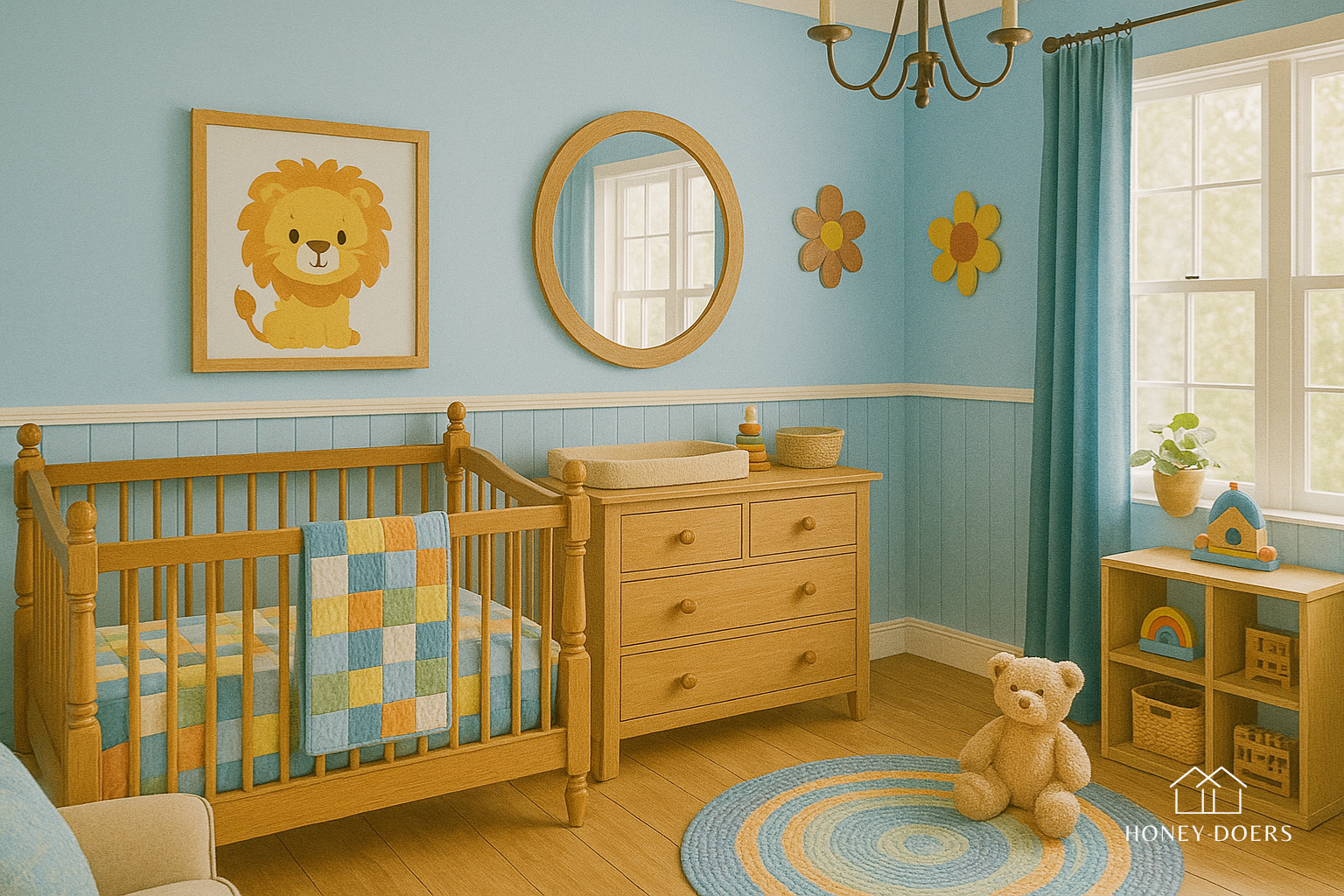
Soft whites, warm taupes, gentle greens, and muted blues create a peaceful backdrop that works for newborns and still feels appropriate for toddlers and elementary-aged children. Neutral palettes also:
- Reduce overstimulation
- Make small nurseries feel larger
- Pair easily with evolving décor
Keywords like nursery room colors and nursery room design ideas naturally tie into this approach.
Think Long-Term for Flooring and Walls
Avoid baby-themed wallpaper or murals. Instead, choose washable paint and incorporate kid-friendly art that can be swapped easily as tastes change.
A timeless foundation ensures you only update the accents—not the entire room—when your child grows.
2. Invest in Versatile, Convertible Furniture
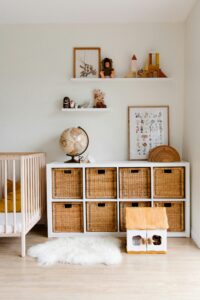
One of the smartest ways to design a flexible nursery is by choosing furniture that adapts across multiple stages of childhood.
Convertible Cribs
Many modern cribs convert to toddler beds, daybeds, or even full-size frames. This reduces future furniture purchases and keeps the room layout consistent.
Changing Tables That Grow With You
Rather than buying a standalone changing table, choose a dresser with a removable changing tray. Once diapering is behind you, the dresser continues to serve a purpose for years.
A Rocking Chair That Becomes a Standard Chair
Select a rocker or glider that’s stylish enough to move into a living room or reading nook later. Avoid bulky nursery-only designs.
Use Scaled Solutions for Small or “Box Room” Nurseries
For families with a compact footprint, box room nursery ideas include:
- Narrow dressers
- Floating shelves instead of large bookcases
- Mini cribs that convert to toddler beds
If the furniture grows with the child, the space itself becomes easier to adapt—and more cost-efficient.
3. Smart, Multi-Purpose Storage Solutions
As babies grow, their belongings grow too—clothes, toys, books, art supplies, sports gear. Smart storage is the key to keeping clutter under control and maintaining a sense of calm.
Modular Shelving That Adapts
Consider adjustable systems such as:
- Built-ins with adjustable shelves
- Open cubes with removable bins
- Wall-mounted shelving for vertical optimization
Under-Crib and Under-Bed Storage
Shallow bins are perfect for storing:
- Out-of-season clothes
- Diapers
- Extra linens
Balance Open and Closed Storage
Open storage displays favorite toys and books, while closed cabinets corral clutter.
Labeling Systems
Clear organization helps kids learn responsibility and makes cleanup faster.
These strategies not only improve functionality but also support future layout changes.
4. Flexible Layouts That Can Change with Each Stage

One of the core principles of designing a nursery that lasts is not locking your furniture into a permanent position.
Stage 1: Infant Layout (0–18 months)
Priorities include:
- Easy nighttime access to the crib
- Safe spacing between furniture pieces
- Dedicated feeding and rocking corner
- Clear paths for movement
Stage 2: Toddler Layout (18 months–3 years)
As independence grows, you’ll want:
- A floor bed or toddler bed
- Open shelves with accessible toys
- Secured furniture to prevent tipping
Stage 3: Early Childhood Layout (3–6 years)
Needs shift again:
- A reading corner with floor seating
- A small desk for drawing
- Taller storage zones for belongings
Choosing floating furniture and avoiding built-ins at this stage makes your room easier to reconfigure down the line.
5. Decor That Matures Over Time
Décor choices are where many families overspend. Instead of committing to short-lived baby themes, use removable layers that evolve with your child.
Use Removable Wallpaper or Decals
Peel-and-stick materials allow you to:
- Add personality
- Refresh easily in the future
- Avoid costly repainting
Swap Textiles, Not Paint
Throw pillows, blankets, and rugs can shift the entire mood of a room without major labor.
Choose Timeless Artwork
Think framed prints, wooden name signs, or simple geometric shapes—easy to relocate as your child grows.
Avoid Trend-Heavy Baby Themes
If your child loves dinosaurs or unicorns, incorporate that into pillows or wall decals, not furniture or paint.
6. Add Zones for Sleep, Play, and Learning
Zoning breaks a nursery into purposeful micro-spaces, making it functional and soothing.
- Sleep Zone: Keep minimal and calming—soft lighting, neutral colors, uncluttered surroundings.
- Play Zone: Organize toys in reachable bins, cushioned mats, and a dedicated corner.
- Learning Zone: A small table, easel, or reading nook with floor cushions creates a space for quiet focus.
Zoning makes any nursery feel larger, even in a small or shared room.
7. Plan for Future Needs
A nursery should serve today’s needs—but it should also prepare for future ones.
Think About:
- Sharing with younger siblings
- Converting the nursery into a child’s bedroom
- Adding a desk or twin bed later
- Relocating the crib when needed
When to Choose Built-Ins
Built-ins are ideal when:
- Storage needs will grow
- Space is extremely limited
- You want to maximize vertical storage
Make choices now that reduce costly renovations later.
Conclusion: Build a Nursery That Grows With Your Family
A nursery designed with flexibility in mind creates years of comfort and ease—not just a beautiful room for the baby phase. By choosing adaptable furniture, smart storage, timeless color palettes, and thoughtful layouts, you can avoid frequent redesigns and enjoy a space that grows as your child does.
If you’re ready to build a nursery that’s both functional and timeless, Honey-Doers can help bring your ideas to life with expert craftsmanship and thoughtful design. Reach out today to start planning a nursery that truly supports your family’s future.